

DashClicks Blog
The industry's top experts offer their best advice, research, how-tos, and insights—all in the name of helping you level-up your business and online marketing skills.
Join Us!
.svg)
.svg)
.svg)
.svg)
.svg)
How Agencies Avoid Strategy Drift When Using White Label SEO
As agencies scale, white label SEO becomes an attractive way to expand services without stretching internal resources. It allows teams to take on more clients, deliver consistent output, and focus on growth. But alongside these benefits, there’s a subtle risk that often goes unnoticed until results start slipping: strategy drift.
In the context of white label SEO, strategy drift happens when the original goals of a campaign slowly lose alignment with execution. It’s not usually caused by poor work or lack of effort. Instead, it stems from a disconnect between strategy, communication, and ownership.
Many agencies assume drift is a result of outsourcing. In reality, white label SEO doesn’t create the problem. It exposes weaknesses that already exist within strategic systems.
This challenge becomes more critical as agencies grow. The more layers you add between strategy and execution, the easier it becomes for direction to shift without anyone noticing.
A recent study highlights the scale of this issue. According to HubSpot (2024), 68% of marketers say aligning marketing activities with business goals is their biggest challenge. If alignment is already difficult within a single team, introducing an external partner increases the complexity.
Understanding where and why strategy drift happens is the first step toward preventing it.
Why Strategy Drift Happens in White Label SEO?
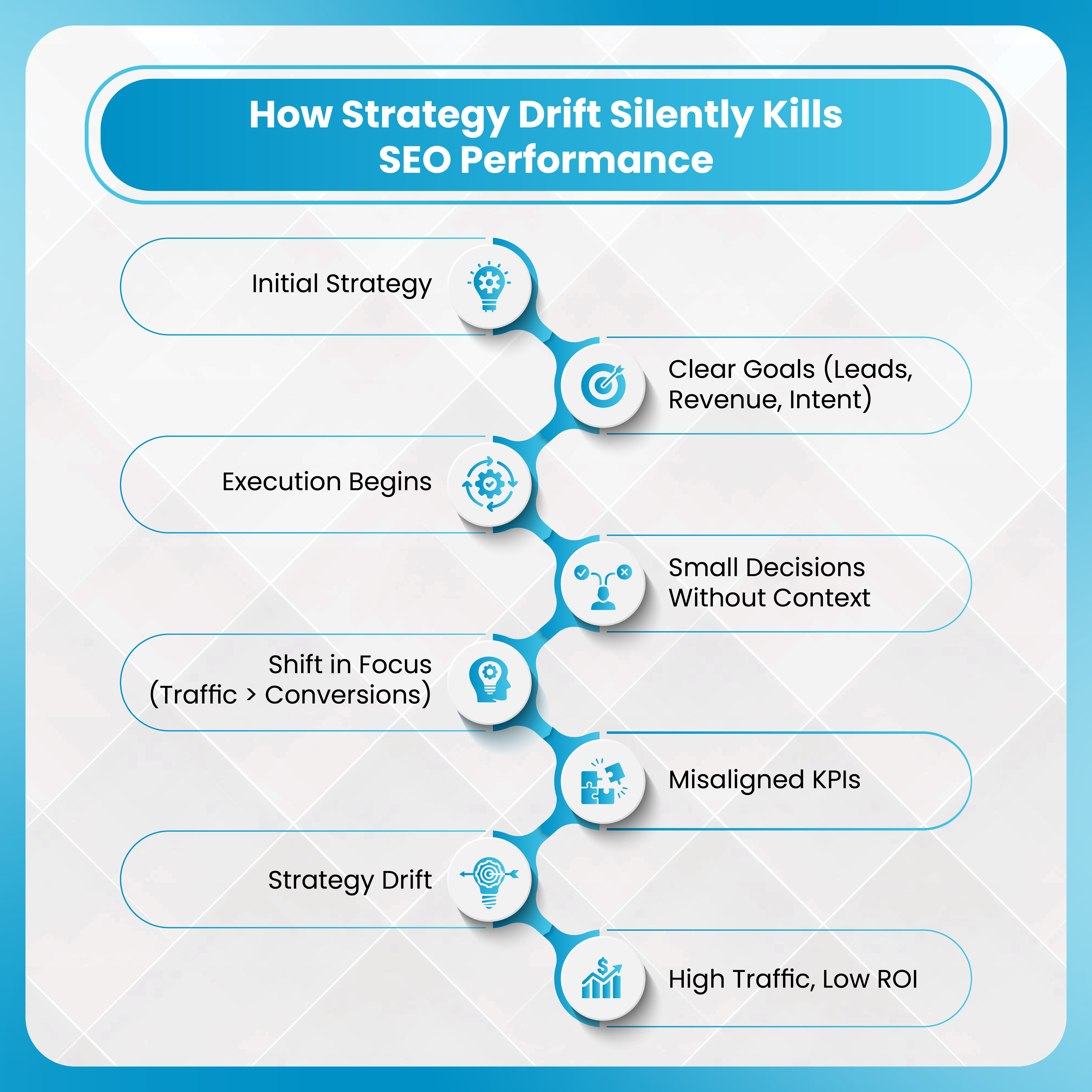
Strategy drift does not happen suddenly. It builds gradually through a series of small shifts between planning and execution. The visual below illustrates how this progression typically unfolds in white label SEO environments.
1. Fragmented Decision Ownership
In most white label setups, agencies define the strategy while partners handle execution. On paper, this looks efficient and scalable. It allows agencies to focus on growth while delegating production work. But in practice, it often creates subtle gaps in decision-making.
The core issue is that ownership becomes divided. Strategy lives with the agency, while execution lives with the partner. However, SEO is not just about executing tasks. It requires constant interpretation and small decisions at every step.
These small choices include:
- Selecting blog topics based on keyword opportunities
- Deciding how internal links are structured
- Choosing anchor text for backlinks
- Prioritizing which pages receive optimization efforts
Individually, none of these decisions seems critical. But together, they shape the direction of the entire campaign.
When execution teams make these choices without full visibility into the broader business goals, the campaign can slowly move away from its original intent.
For example, an agency may define a strategy focused on high-intent service keywords with the goal of generating leads. However, the execution team may start prioritizing informational content because:
- It is easier to produce at scale
- It ranks faster
- It shows quicker traffic gains
Over time, the campaign shifts toward top-of-funnel traffic. Reports begin to show growth in impressions and visits. On the surface, performance looks strong. But when you look deeper, conversions remain flat. Lead quality may even decline.
This is where the real impact of fragmented ownership becomes clear. The campaign did not fail due to poor execution. It drifted because execution decisions were made without consistent strategic alignment.
Drift rarely comes from one big mistake. It builds through dozens of small, reasonable decisions that were never connected back to the core objective.
2. KPI Misalignment Between Agency and Partner
Another major driver of strategy drift is misaligned performance metrics. Agencies and white label SEO partners often operate with different definitions of success. This is not due to disagreement, but due to perspective.
Agencies are accountable to clients. Their focus is on outcomes such as:
- Revenue growth
- Lead generation
- Cost per acquisition
- Overall return on investment
White label SEO partners, however, are typically measured on deliverables and SEO-specific metrics like:
- Keyword rankings
- Number of backlinks acquired
- Organic traffic growth
- Technical improvements
Both sets of metrics are important. The problem arises when they are not connected.
A campaign can show steady growth in rankings and traffic, yet still fail to generate meaningful business results. This creates a false sense of progress.
For example:
- A page ranks on the first page for a high-volume keyword
- Organic traffic increases significantly
- Engagement metrics look healthy
But if that keyword reflects informational intent rather than buying intent, it may not drive conversions. The campaign appears successful in reports, but underperforms where it matters most.
This disconnect is increasingly recognized across the industry. According to HubSpot’s State of Marketing (2024), 61% of marketers say improving ROI measurement is their top priority.
This statistic highlights a key shift. Businesses are no longer satisfied with visibility alone. They want a measurable impact on revenue and growth.
When KPI alignment is missing, teams tend to optimize for what is easiest to measure rather than what drives value. Rankings and traffic become the focus, while conversions and revenue are treated as secondary outcomes.
Over time, this leads to a strategy that looks strong on paper but delivers limited business impact.
3. Strategy Dilution Over Time
At the start of a campaign, strategy is usually clear and well-defined. Agencies invest time in:
- Understanding the client’s business model
- Identifying target audiences
- Mapping keyword opportunities
- Defining conversion pathways
This initial phase is often detailed and thoughtful. But as the campaign progresses, something changes. The strategy document that once guided decisions becomes less visible. Teams move into execution mode, focusing on:
- Publishing scheduled content
- Completing link-building targets
- Updating pages based on audits
These activities are necessary, but they can become routine. When execution becomes repetitive, the connection to the original strategy weakens. Teams may continue producing work without revisiting the “why” behind it. This is how dilution happens.
It is not caused by neglect or lack of skill. It happens because:
- Strategy is not revisited regularly
- Context is not reinforced across teams
- New insights are not integrated into the plan
Over time, the campaign evolves based on momentum rather than intention. Drift at this stage is gradual and often unnoticed. Performance may not drop immediately, which makes it harder to detect. But the long-term impact becomes visible in stagnation or declining ROI.
Maintaining strategic clarity requires ongoing effort, not just a strong start.
4. Over-Systemization Without Strategic Feedback
Systems and processes are essential for scaling SEO operations. Standard operating procedures help teams maintain consistency, meet deadlines, and manage large volumes of work.
However, there is a trade-off. SOPs are designed to standardize execution. They are not designed to question or adapt the strategy. When teams rely too heavily on predefined workflows, they may prioritize completion over evaluation. This creates a situation where:
- Content is published consistently
- Backlinks are built regularly
- Technical tasks are completed on schedule
From an operational perspective, everything runs smoothly. But without strategic feedback, these activities may no longer align with current goals.
For example, a content SOP might require a fixed number of blog posts each month. The team continues producing content to meet that quota. However, if those topics are no longer aligned with search intent or business priorities, the output loses value.
Similarly, link-building campaigns may focus on volume rather than relevance, simply because the process is built around targets. The absence of feedback loops turns systems into rigid structures. Instead of supporting the strategy, they begin to operate independently.
This is where drift accelerates. The campaign continues to move forward, but not necessarily in the right direction. To avoid this, systems must be paired with regular evaluation. Execution should inform strategy, and strategy should reshape execution.
5. Lack of Closed-Loop Feedback
One of the most overlooked causes of strategy drift is the lack of feedback between stakeholders.
In a typical white label SEO setup, multiple parties are involved:
- The client
- The agency
- The white label partner
- Sometimes separate content or analytics teams
Each group holds valuable insights. But these insights are not always shared effectively. Common gaps include:
- SEO teams do not have access to sales or CRM data
- Content teams do not receive feedback on lead quality
- Partners are not informed about which campaigns drive revenue
Without this information, execution teams are working with incomplete data. They may optimize for traffic or engagement without knowing whether those metrics translate into actual business results.
This creates a disconnect between performance and impact.
Research from Google and Deloitte (2023) shows that companies aligning marketing metrics with business outcomes are 1.6 times more likely to achieve revenue growth. This finding reinforces a simple idea. Data must flow across the entire system for the strategy to remain effective.
Closed-loop feedback ensures that:
- High-performing keywords are identified based on conversions, not just traffic
- Content strategies evolve based on real user behavior
- SEO efforts are adjusted based on sales outcomes
Without this loop, campaigns operate in silos. Each team focuses on its own metrics, without understanding the full picture.
As a result, improvements in one area may not contribute to overall success. Strategy drift is rarely caused by a single issue. It emerges when multiple small gaps combine over time.
The common thread across all these causes is disconnection. Between strategy and execution. Between metrics and outcomes. Between teams and insights.
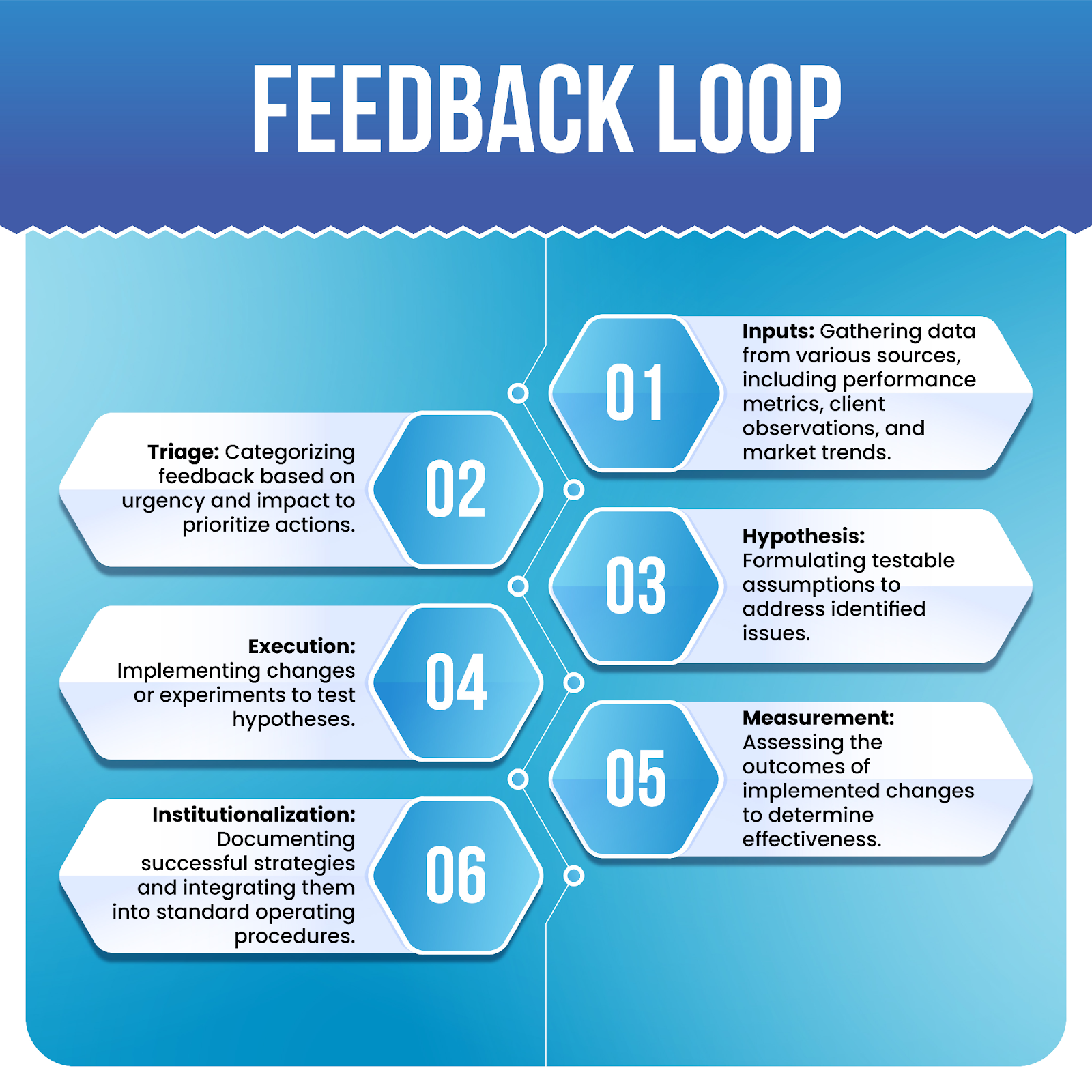
Addressing drift does not require more control or stricter processes. It requires better alignment, clearer communication, and systems that connect every part of the campaign.
How Agencies Build Anti-Drift Systems with White Label SEO?
1. Establish a Single Source of Strategic Truth
To prevent drift, agencies need a centralized and dynamic strategy system. This is not a one-time document. It is a living framework that evolves with the campaign.
A strong strategy system should include:
- Revenue goals tied directly to SEO efforts
- Ideal customer profiles and search intent layers
- Keyword clusters mapped to different funnel stages
- Clear conversion pathways
When strategy lives in a system rather than a static brief, alignment becomes easier to maintain. Everyone involved in execution can refer back to the same source of truth.
2. Shift from Task-Based to Intent-Based Execution
One of the most effective ways to avoid drift is to redefine how work is assigned. Instead of focusing on tasks, agencies should focus on intent. Every deliverable should answer two key questions:
- What business goal does this support?
- Where does it fit in the customer journey?
For example, instead of saying: “Write 8 blogs per month.”
Define the goal as: “Create content that captures mid-funnel search intent and supports service page conversions.”
This shift ensures that every action contributes to a larger objective.
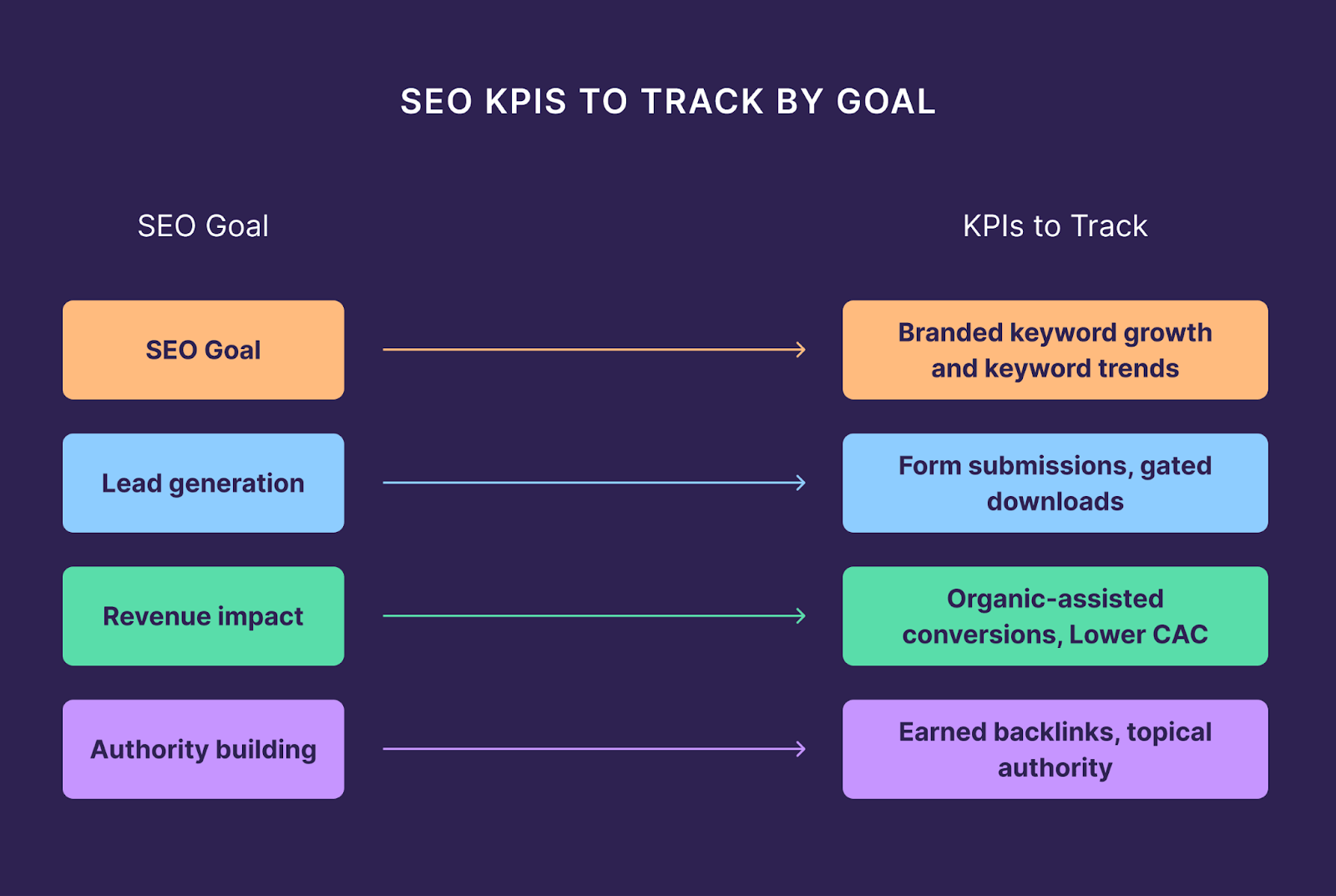
Image Source: Backlinko
3. Implement Intent-Based KPI Mapping
Metrics should reflect the full customer journey, not just top-level performance. Agencies can structure KPIs across three stages:
- Awareness: traffic growth and keyword visibility
- Consideration: engagement metrics like time on page and bounce rate
- Conversion: leads, sales, and revenue
This approach prevents over-investment in top-of-funnel content that does not drive business outcomes. It also creates a clearer connection between SEO efforts and client success.
4. Build Structured Communication Loops
Consistency in communication is essential for maintaining alignment. High-performing agencies establish regular check-ins at different levels:
Weekly (Execution Layer):
- Review tasks and progress
- Address blockers quickly
Monthly (Strategy Layer):
- Compare execution with original goals
- Identify early signs of drift
Quarterly (Business Alignment Layer):
- Connect SEO performance to revenue and pipeline
- Adjust strategy based on results
Most agencies report performance. The best ones recalibrate their strategy continuously.
5. Introduce Drift Detection Signals
Drift often shows up in subtle ways before it becomes a major issue. Agencies should monitor early warning signs such as:
- Increasing traffic but declining conversions
- Higher rankings without growth in leads
- More content production but lower engagement
These signals are often mistaken for progress.
In reality, they indicate misalignment. Catching these patterns early allows agencies to adjust before results decline.
6. Create an SEO Alignment Scorecard
Traditional reports focus on activity and output. A better approach is to measure alignment. An SEO alignment scorecard might track:
- Percentage of efforts focused on revenue-driving pages
- Accuracy of keyword intent targeting
- Contribution of organic traffic to conversions
- Ratio of content production to actual results
This shifts the focus from “how much was done” to “how well it supports business goals.”
7. Define Clear Control and Delegation Boundaries
A successful white label SEO partnership depends on clarity. Agencies should retain control over:
- Strategy development
- KPI definition
- Client communication
White label partners should focus on:
- Execution
- Technical SEO implementation
- Scalable content and link building
Problems arise when agencies outsource strategic thinking instead of execution. Maintaining this boundary keeps direction consistent.
8. Treat White Label SEO as a Strategic Extension
The best results come when partners are treated as extensions of the agency, not just vendors. This means sharing:
- Business context
- Customer insights
- Sales data
- Market positioning
When execution teams understand the “why” behind tasks, they make better decisions. This reduces the risk of drift and improves overall performance. Even with strong systems in place, the choice of partner plays a critical role.
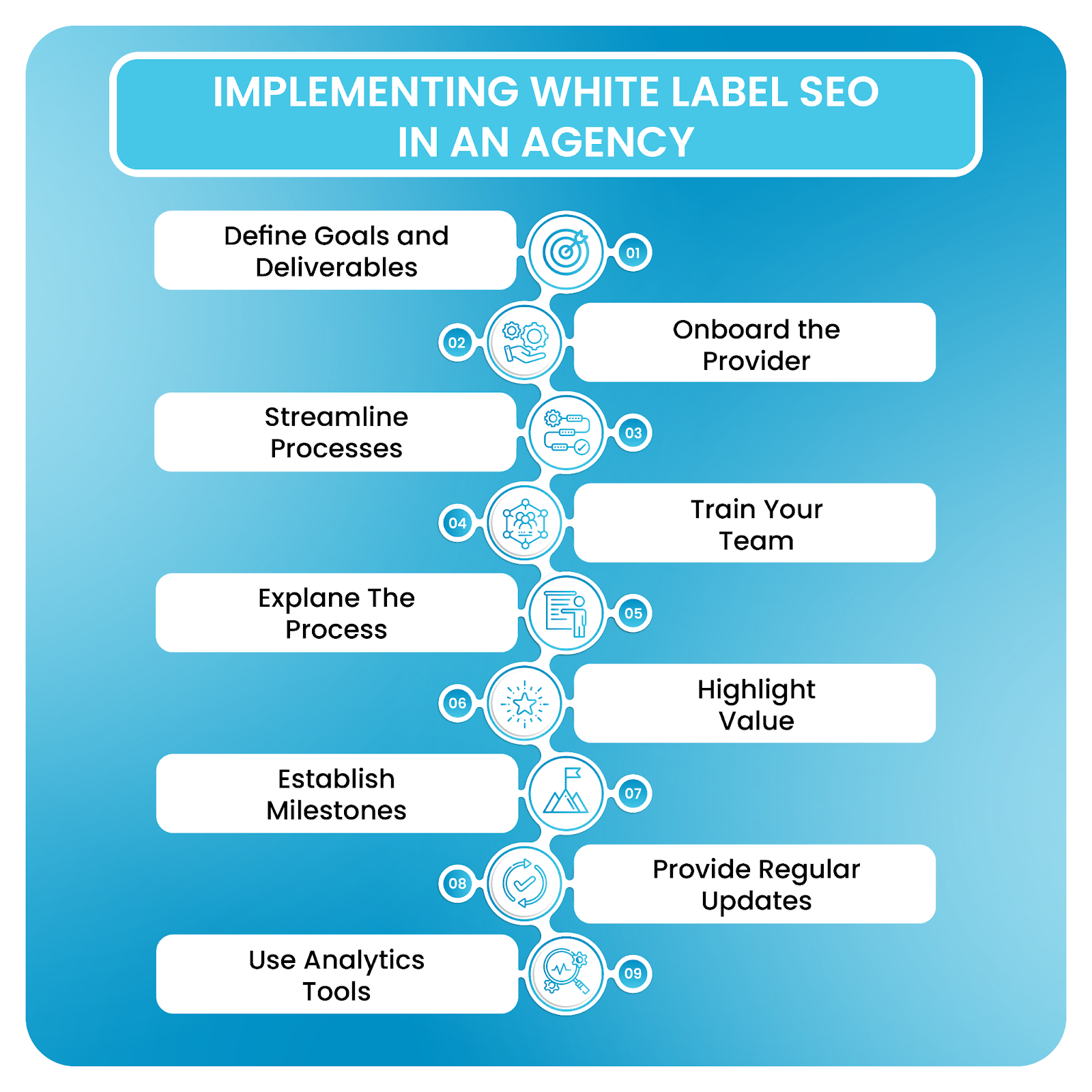
How DashClicks Helps Agencies Stay Strategically Aligned?
When agencies work with a platform like DashClicks, the focus goes beyond task completion. The system is designed to support alignment between strategy and execution.
DashClicks provides:
- Alignment-focused execution that supports agency-defined goals rather than generic deliverables
- Centralized reporting dashboards that connect SEO performance with real client KPIs
- Scalable services, including technical SEO, content creation, and link building
- Structured workflows that improve consistency and reduce communication gaps
One of the key advantages is that agencies maintain control over strategy and client relationships, while white label SEO services handle execution at scale.
This balance allows agencies to grow without losing direction. By combining clear communication, standardized processes, and performance tracking, the system helps reduce the risk of drift while improving efficiency.
The real value is not just outsourcing SEO tasks. It is enabling agencies to stay focused on strategy, growth, and measurable results.
Conclusion: From Drift Prevention to Strategic Advantage
Strategy drift is not a reflection of poor talent or weak execution. It is a systems issue. When alignment breaks down, even strong teams can lose direction.
Preventing drift requires:
- Shared ownership of goals
- Intent-driven execution
- Continuous feedback and recalibration
Agencies that invest in alignment do more than improve SEO performance. They build systems that scale effectively and deliver consistent results.
White label SEO, when managed correctly, becomes a powerful advantage rather than a risk. It allows agencies to expand capacity while maintaining strategic control. The difference lies in how well systems are designed and how clearly roles are defined.
If you are looking to scale your agency without losing alignment, it starts with choosing the right partner and building the right processes.
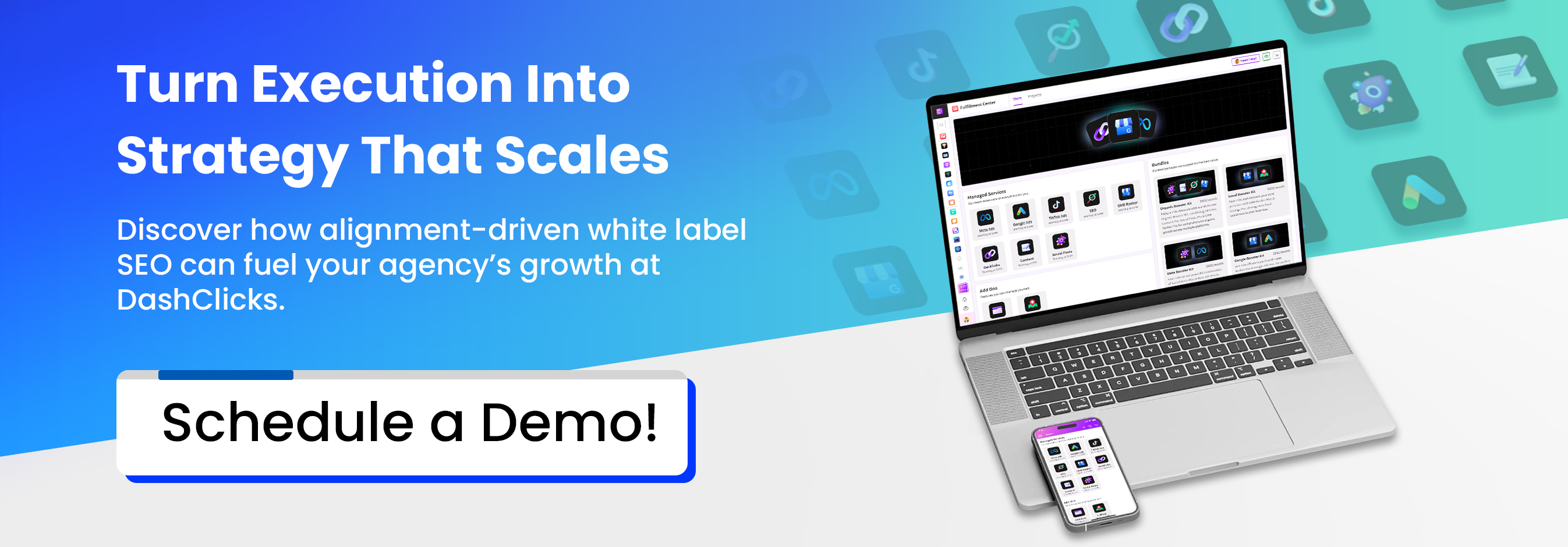

From Metric to Strategy: How Impression Share Drives Scalable PPC Growth
Impression Share is one of those metrics that looks simple on the surface but carries deep strategic value. At its core, it represents the percentage of times your ads appear compared to how often they could appear. Many agencies treat it as a visibility metric. In reality, it’s a direct indicator of missed opportunities.
The challenge is not just increasing visibility. It’s doing so without creating operational strain. As agencies scale, they often hit a ceiling. Teams become stretched, campaigns require constant optimization, and rising cost-per-click (CPC) adds pressure to deliver results efficiently.
Even highly capable agencies run into the same issues:
- Limited internal bandwidth
- Gaps in specialized PPC expertise
- Increasing complexity in managing multiple accounts
Growing impression share consistently requires more than effort. It requires a scalable system. This is where a smarter approach becomes necessary, one that does not rely only on hiring more people or extending working hours.
Why Is Impression Share Is a Strategic KPI (Not Just a Metric)?
To truly understand the value of impression share, it’s important to look beyond its surface definition and examine what it reveals about campaign performance and missed opportunities. At its core, impression share reflects how often your ads are entering the auction and winning visibility compared to the total potential available.
Breaking it down into its key components gives a clearer picture:
- Search Impression Share: This shows the percentage of impressions your ads receive out of the total eligible impressions. It answers a simple but critical question: How visible are you when it matters?
- Lost Impression Share (Budget): This indicates how often your ads are not shown because your budget is too limited. Even well-optimized campaigns can underperform if they run out of budget too early in the day.
- Lost Impression Share (Rank): This reflects how often your ads miss impressions due to low ad rank, which is influenced by bid levels, ad relevance, and quality score.
Each of these metrics points to a different constraint, and together they provide a roadmap for improvement.
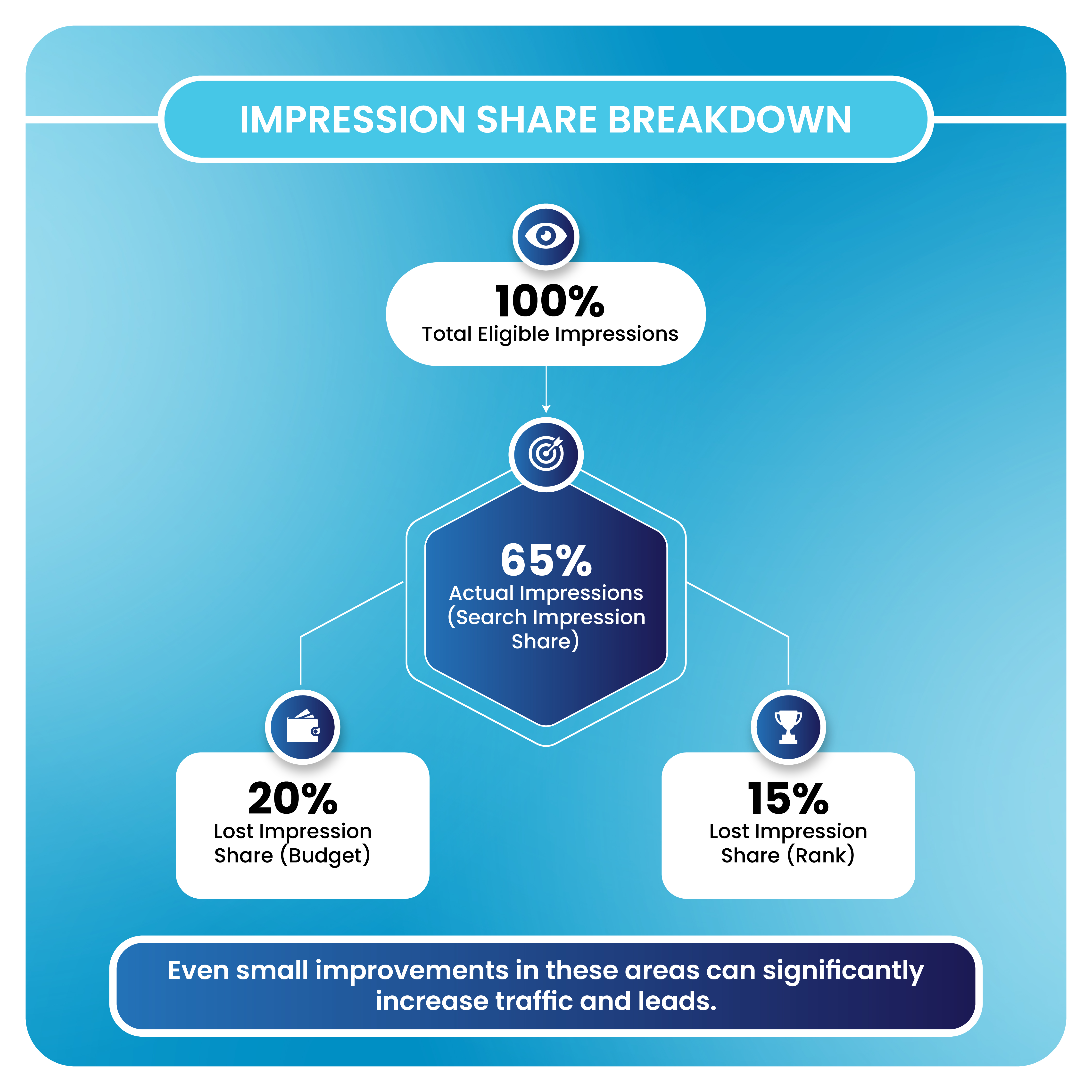
What makes impression share truly strategic is how directly it connects to business outcomes. When managed correctly, even small improvements can lead to meaningful gains:
- Higher impression share often translates into increased lead volume because your ads appear more frequently in relevant searches
- Stronger visibility builds brand familiarity, especially when users repeatedly see your ads in top positions
- Greater presence in search results helps push competitors further down the page, strengthening your market position
However, the goal is not to appear in every possible search. That approach quickly becomes inefficient and expensive. Instead, the real objective is to capture visibility in the moments that matter most. For instance, dominating branded keywords ensures you control your own traffic, while focusing on high-intent queries increases the likelihood of conversions.
This is where impression share shifts from being a simple metric to a decision-making tool. It helps agencies prioritize where to invest budget, which keywords to defend aggressively, and where to scale back.
Achieving this level of precision requires ongoing attention. Campaigns need to be monitored regularly, insights must be acted on quickly, and adjustments should be made before performance drops. This is the point where many agencies begin to experience pressure.
The Operational Bottleneck: Why Agencies Struggle to Scale PPC
Managing PPC campaigns effectively is not a one-time effort. It’s an ongoing cycle of analysis, testing, and refinement. Every campaign generates new data daily, and that data needs to be translated into actionable changes.
As agencies grow and take on more clients, this process becomes harder to sustain at a high level. Several common challenges start to emerge:
- A limited number of experienced PPC specialists handling multiple accounts
- Optimization cycles that take longer due to workload and competing priorities
- Gaps in monitoring, where campaigns are not reviewed as frequently as needed
These challenges may seem manageable at first, but over time, they lead to noticeable inefficiencies.
The consequences are significant:
- Missed Auction Opportunities: If bids are not adjusted in time, competitors can easily take higher positions
- Delayed Reactions to Performance Changes: Trends such as rising CPCs or shifting search behavior can go unnoticed for too long
- Underutilized Budgets: Campaigns may either overspend inefficiently or fail to capture available traffic
The data clearly highlights the impact of these inefficiencies. Google has reported that ads appearing in top positions can generate 2 to 3 times higher click-through rates (CTR) compared to those shown lower on the page. This means that even a slight drop in position can lead to a significant loss in traffic.
In addition, industry benchmarks from WordStream show that the average Google Ads CTR across industries is around 6.11% for search campaigns. When campaigns miss impressions, they are effectively giving up a share of that potential traffic and engagement.
What makes this more challenging is that these losses are often gradual and not immediately obvious. A campaign might still perform reasonably well, but it is quietly missing out on a large portion of available opportunities.
This is why scaling PPC successfully is not just about increasing budgets or adding more campaigns. It requires maintaining a high level of optimization consistency across all accounts.
The reality is straightforward. Agencies need a way to increase the frequency and quality of their optimizations without putting additional strain on their internal teams. Without that, growth eventually slows, and performance plateaus.
White Label PPC: A Strategic Growth Lever, Not Just Outsourcing
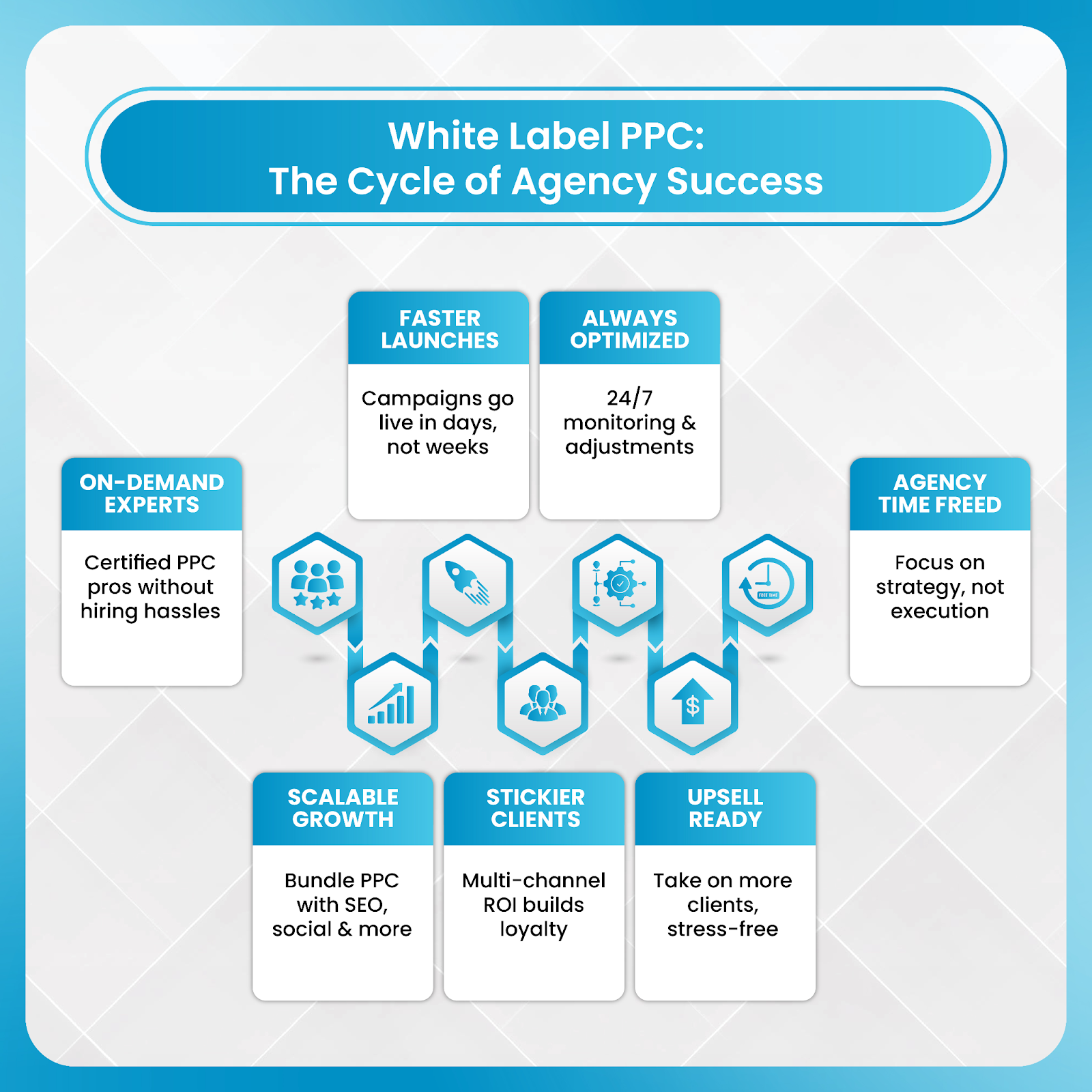
White label PPC is often seen as a way to offload work. In reality, it plays a much bigger role in how modern agencies scale performance. It acts as an execution engine that allows campaigns to run at a higher level of consistency and speed without increasing internal pressure.
Instead of simply assigning tasks, agencies gain access to a dedicated layer of expertise focused entirely on campaign performance. This shift changes how PPC is managed. It moves from reactive adjustments to proactive optimization.
A strong white label PPC partner typically brings:
- Advanced bid management strategies that adapt to real-time auction dynamics
- Continuous campaign optimization, ensuring no account is left unattended
- Access to premium tools and deeper data insights that may not be available in-house
The biggest advantage here is not just saving time or reducing costs. It’s optimization velocity. Campaigns are monitored more frequently, adjustments are made faster, and performance trends are acted on before they become problems.
This speed creates consistency. And consistency is what drives sustained improvements in impression share.
With execution handled at scale, agencies can redirect their attention to what matters most. Strategy, client communication, and growth planning become the focus instead of day-to-day campaign management.
Core Levers to Improve Impression Share Strategically
Improving impression share is not about pulling a single lever. It requires a combination of strategic decisions across budget, keywords, and bidding. When these elements work together, visibility increases in a controlled and profitable way.
Strategic Lever #1: Budget Optimization for Maximum Auction Coverage
Budget plays a direct role in how often your ads can enter auctions. Even well-performing campaigns can lose a significant share of impressions if budgets are exhausted too early.
Instead of simply increasing spend, the goal is to allocate budget more intelligently.
This includes:
- Prioritizing campaigns and keywords that drive the highest conversions
- Using dayparting to focus spending during peak performance hours
- Adjusting budgets based on geographic areas that deliver stronger results
For example, an agency might shift 20% of its budget away from low-performing campaigns and reinvest it into high-intent search terms. Within a month, this can lead to a noticeable lift in impression share, sometimes by 30% or more in targeted segments.
Data from Google Ads consistently shows that Lost Impression Share (Budget) is one of the most common reasons campaigns fail to reach their full visibility potential.
However, the budget alone cannot solve the problem. Even with sufficient spend, campaigns can still miss impressions if they are not targeting the right opportunities.
Strategic Lever #2: Keyword Expansion Without Wasted Spend
Keyword strategy determines where and how often your ads appear. Expanding keyword coverage can unlock new impression opportunities, but only when done with precision.
Effective expansion focuses on:
- Long-tail keywords that are less competitive but highly relevant
- Competitor terms that allow you to capture market share
- High-intent variations that indicate strong purchase or inquiry signals
One of the most overlooked areas is search term analysis. Campaigns generate valuable data every day, yet many agencies do not review it frequently enough. This leads to missed opportunities for both expansion and refinement.
For instance, introducing long-tail keywords into a campaign can lower CPC by around 15–20% while increasing impression share within niche segments. These keywords often bring in more qualified traffic as well.
The key is maintaining balance. Expanding reach should never come at the cost of relevance. More impressions only matter when they contribute to meaningful engagement.
Strategic Lever #3: Bid Strategy Alignment with Impression Goals
Winning impressions ultimately come down to bidding. Even with the right budget and keywords, ads will not appear consistently if bidding strategies are not aligned with campaign objectives.
Agencies typically choose between:
- Manual bidding, which offers more control over individual adjustments
- Automated strategies, such as Target Impression Share or Target CPA
Each approach serves a different purpose. For example:
- Target Impression Share is highly effective for branded campaigns where maintaining visibility is critical
- Target CPA works better for campaigns focused on cost efficiency and conversions
Beyond the overall strategy, fine-tuning bids based on specific variables can significantly improve performance:
- Device type, as user behavior varies across mobile and desktop
- Location, to prioritize regions with stronger results
- Audience segments, based on intent and engagement patterns
A practical example would be switching a branded campaign to a Target Impression Share strategy. This can quickly push ads into top-of-page positions, often achieving over 90% visibility and reinforcing brand authority.
The challenge is maintaining the right balance. Increasing bids can improve visibility, but it must be done without sacrificing return on investment.
When these three levers work together, impression share becomes more than just a metric. It becomes a controlled outcome driven by smart decisions and consistent execution.
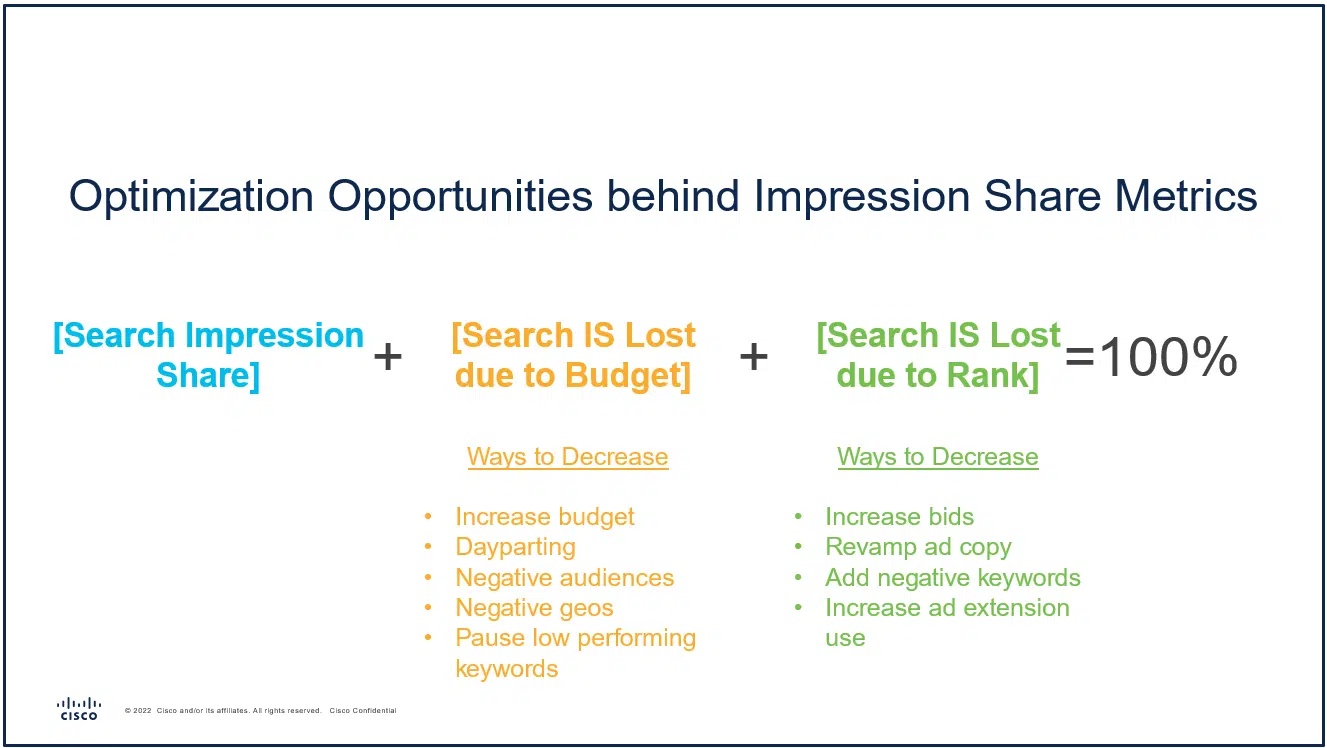
Image Source: SearchEngineLand
How White Label PPC Improves Optimization Velocity?
Execution speed is often the difference between average and exceptional performance.
White label PPC teams operate with:
- Daily optimization cycles instead of weekly reviews
- Real-time adjustments to bids and budgets
- Continuous testing of ad creatives
They also use:
- Automation scripts
- AI-driven insights
- Advanced analytics tools
This leads to faster reactions to auction changes. As a result, impression share becomes more stable and predictable.
Agencies no longer fall behind due to delays in execution.
Aligning Impression Share with Client Growth Objectives
Not every campaign needs maximum visibility. Smart agencies align impression share with business goals.
This includes mapping it to:
- Lead generation targets
- Revenue growth
- Market expansion strategies
There are also cases where increasing impression share is not ideal:
- Low-margin campaigns
- Poorly converting segments
- Broad keywords with low intent
More impressions only matter when they lead to meaningful outcomes.
This strategic alignment separates high-performing agencies from those chasing vanity metrics.
A Practical Framework for Agencies
To implement this effectively, agencies can follow a structured approach:
Step 1: Audit Impression Share Gaps: Identify where impressions are being lost and why.
Step 2: Identify the Constraint: Determine whether the issue is budget or rank.
Step 3: Deploy White Label Execution Support: Bring in a team to handle continuous optimization.
Step 4: Optimize Consistently: Focus on -
- Budget allocation
- Keyword expansion
- Bid adjustments
Step 5: Align With Client KPIs: Ensure visibility translates into measurable results.
This framework creates a repeatable system for growth.
How DashClicks Enables Agencies to Scale Impression Share
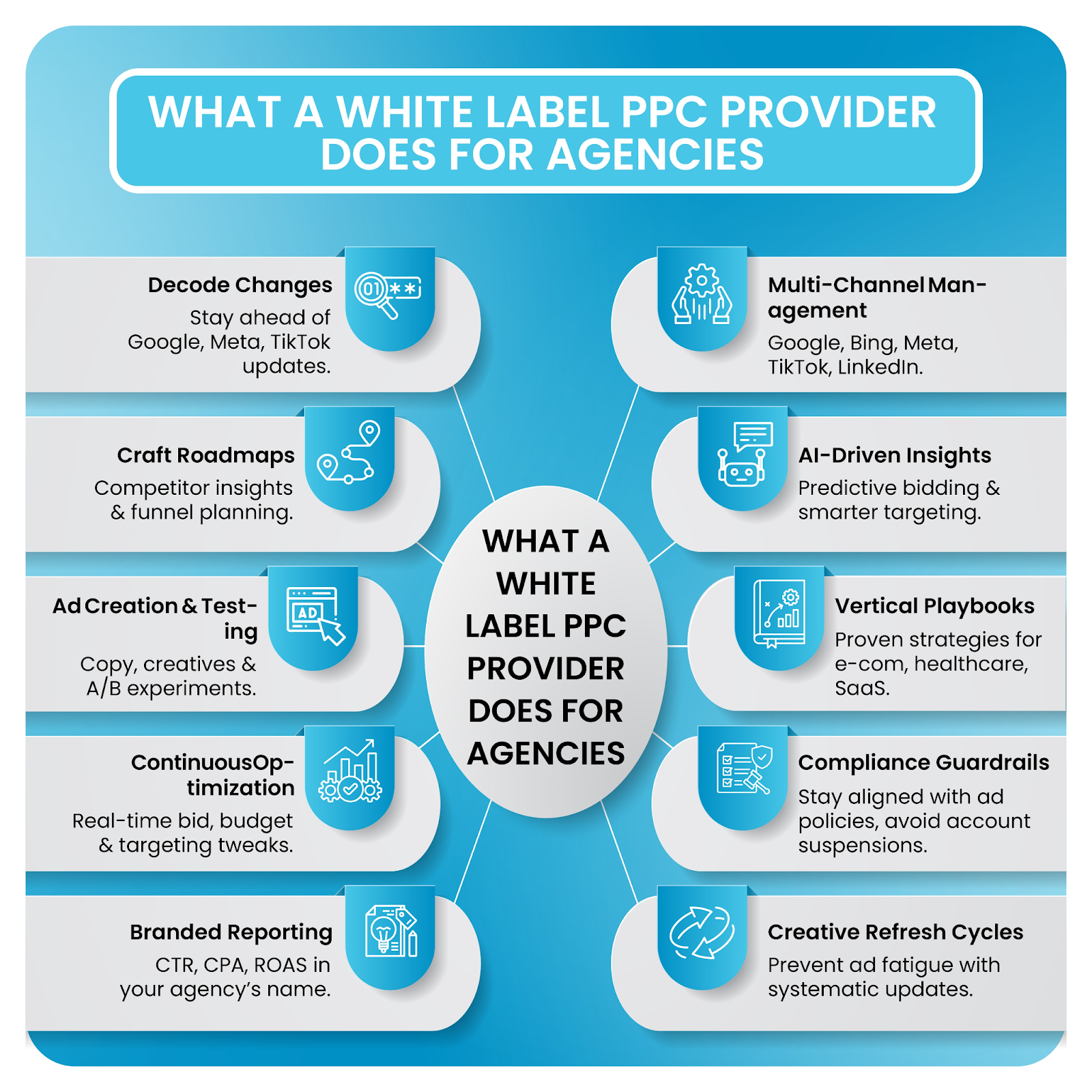
DashClicks provides a comprehensive white label PPC services designed to help agencies scale without increasing internal workload. Their platform combines campaign setup, ongoing optimization, and performance tracking into a single streamlined system.
Agencies working with DashClicks benefit from:
- Full-service PPC campaign management
- Continuous optimization of bids, budgets, and keywords
- Dedicated account managers who monitor performance closely
- Detailed reporting tools that provide clear insights into impression share and campaign effectiveness
What makes DashClicks particularly valuable is how it improves execution speed. Campaigns are monitored consistently, ensuring ads appear more often in high-value auctions.
Instead of replacing internal teams, DashClicks acts as an extension of the agency. It enhances capacity, allowing teams to focus on strategy while maintaining high optimization standards across all accounts.
This combination of scale and precision is what helps agencies achieve more consistent growth in impression share.
Conclusion: From Capacity Limits to Strategic Advantage
Improving impression share is not about increasing visibility blindly. It’s about making smarter decisions across budgets, keywords, and bidding strategies.
Agencies that succeed understand a few key principles:
- Impression Share directly impacts growth and competitiveness
- Execution speed determines performance outcomes
- Scalability requires systems, not just effort
White label PPC transforms what used to be a limitation into an advantage. It allows agencies to optimize faster, respond quicker, and maintain consistency across campaigns.
In a landscape where competition is constantly increasing, the ability to act quickly and strategically is what sets successful agencies apart.
If you're looking to scale your PPC performance without stretching your team thin, it may be time to explore a smarter approach.


How Agencies Use White Label SEO to Keep Up with Search Trends
Search is no longer just about ranking on Google. It has evolved into a complex ecosystem where users discover information across multiple platforms, often without even clicking on a website.
Today, search includes AI-generated answers, voice assistants, social platforms, and traditional search engines. This shift has fundamentally changed how visibility works. Agencies are no longer competing for just the top position on a results page. They are competing to be part of the answer itself.
The pace of change is also accelerating. AI-driven search traffic has grown by over 527% year-over-year, while nearly 60% of searches now end without a click. That means users are getting what they need directly from search results or AI responses.
For agencies, this creates a serious challenge. How do you keep up with constant changes while managing multiple clients and maintaining consistent performance?
This shift forces agencies to rethink SEO entirely, not just how they execute it, but how they build the capability to keep up with it at scale. So, how do high-performing agencies stay ahead?
The Search Landscape in 2026
Search in 2026 is being shaped by a combination of AI advancements, shifting user behavior, and the expansion of discovery across multiple platforms. As highlighted in the evolving SEO landscape, success is no longer driven solely by rankings or clicks.
Instead, it depends on how well brands adapt to AI-driven search systems, build strong content authority, and maintain visibility across an increasingly fragmented ecosystem. From AI-powered answers to omnichannel discovery and new performance metrics, these changes are redefining how agencies approach SEO strategy and execution.
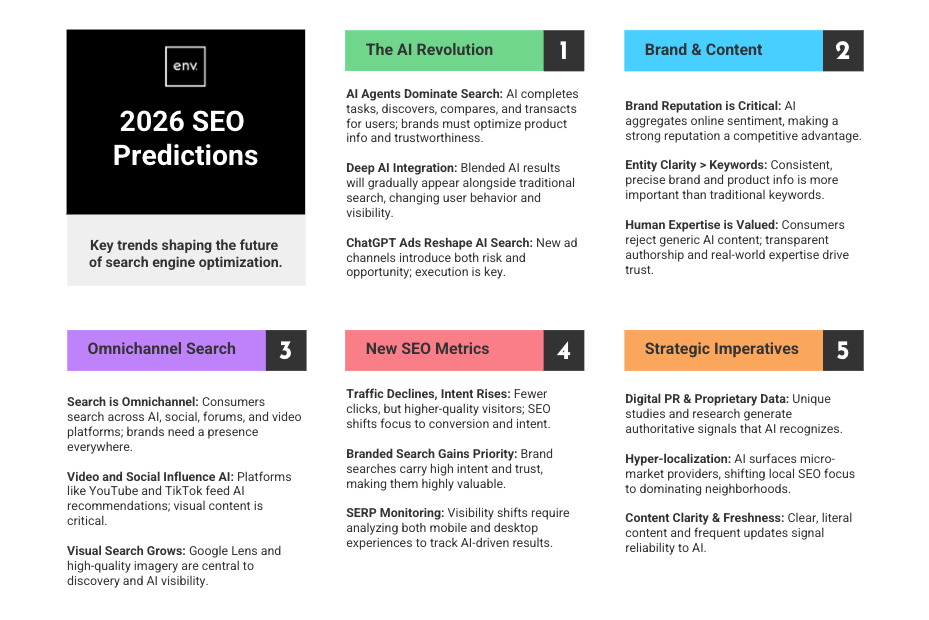
Image Source: Envisionit
1. AI-First Search Ecosystem
Search engines have evolved far beyond simple indexing systems. Today, they act more like intelligent assistants that interpret intent, process context, and deliver direct answers. This shift is being driven by rapid advancements in artificial intelligence, changing how information is presented and consumed.
Instead of showing a list of links, search platforms now generate summarized responses, highlight key insights, and often answer queries without requiring users to visit a website. AI-generated overviews, conversational search interfaces, and answer engines are becoming a standard part of the search experience.
This transformation has introduced a new approach known as Generative Engine Optimization (GEO). Unlike traditional SEO, where the goal is to rank higher on search engine results pages, GEO focuses on getting content cited, referenced, or used within AI-generated answers.
To succeed in this environment, agencies must rethink how content is created and structured. It is no longer enough to target keywords alone. Content must now:
- Provide clear and direct answers to user queries
- Be structured in a way that AI systems can easily interpret
- Demonstrate strong topical authority and credibility
- Align closely with user intent and conversational queries
AI systems prioritize content that is trustworthy, well-organized, and contextually rich. This means agencies need to focus more on clarity, depth, and accuracy rather than just optimization techniques.
In short, the competition is no longer just other websites. It is also about earning a place within AI-generated responses.
2. Decline of Traditional Click-Based SEO
The concept of SEO has long been tied to clicks. Higher rankings meant more traffic, and more traffic often meant better results. That relationship is now changing.
With the rise of zero-click searches, users are increasingly finding answers directly on search pages. Featured snippets, knowledge panels, and AI-generated summaries provide immediate information, reducing the need to click through to a website.
Recent data shows that a large percentage of searches now end without a click. Even more striking, the click-through rate for top-ranking results has dropped significantly, in some cases by over 32%. This means that even if a page ranks first, it may not receive the same level of traffic as before.
For agencies, this creates a shift in how success is measured. Rankings alone are no longer enough. Instead, performance must be evaluated based on a broader set of metrics, such as:
- Search visibility across different result types
- Brand presence in featured snippets and AI responses
- Engagement and conversions rather than just traffic
- Influence on user decisions, even without direct clicks
This change also affects how value is communicated to clients. Agencies must help clients understand that visibility and brand positioning within search results can drive impact, even when traffic numbers do not increase in the same way.
The focus is moving from “How many clicks did we get?” to “How visible and influential is the brand in search?”
3. Multi-Platform Search Behavior
Search behavior is no longer confined to traditional search engines. Users now rely on a variety of platforms to find information, often choosing the one that best fits their needs in the moment.
For example:
- YouTube has become a primary destination for tutorials, product reviews, and how-to content
- Social platforms are widely used for discovering trends, recommendations, and real-world experiences
- AI tools are increasingly used for quick answers, summaries, and research support
This shift has created a fragmented search environment where discovery happens across multiple channels. Users may start their search on one platform and continue it on another, or they may never use a traditional search engine at all.
For agencies, this means SEO can no longer be treated as a single-channel strategy focused only on search engines. Instead, it must evolve into a broader visibility strategy that includes:
- Video content optimization for platforms like YouTube
- Social content aligned with search intent and SEO trends
- Content structured for AI tools and conversational interfaces
- Consistent messaging and branding across all discovery channels
This multi-platform approach ensures that brands remain visible wherever users are searching, not just on one platform.
The key takeaway is clear. SEO is no longer just about ranking on search engines. It is about being discoverable across an entire ecosystem of platforms and technologies.
Understanding these changes is essential, but awareness alone is not enough. Agencies must translate these insights into actionable strategies that help clients stay competitive and visible in an increasingly complex search landscape.
Why Staying Ahead of Search Trends Is Critical for Agency Clients?
1. Revenue Impact of Search Evolution
Search continues to play a major role in revenue generation. AI-driven search alone is expected to influence hundreds of billions of dollars in revenue over the next few years.
If clients are not optimized for these new systems, they risk losing visibility where it matters most.
2. Competitive Risk
Early adopters of new SEO strategies often gain a strong advantage. They appear in AI-generated responses, build authority faster, and capture more attention.
Late adopters, on the other hand, face:
- Declining organic traffic
- Reduced visibility
- Lower brand recall
In a competitive market, this gap can grow quickly.
3. Changing Client Expectations
Clients are more informed than ever. They expect:
- Faster results
- Broader visibility across platforms
- Measurable outcomes beyond rankings
Agencies are no longer judged only on rankings. They are judged on leads, conversions, and overall visibility. This creates pressure to deliver better results, faster.
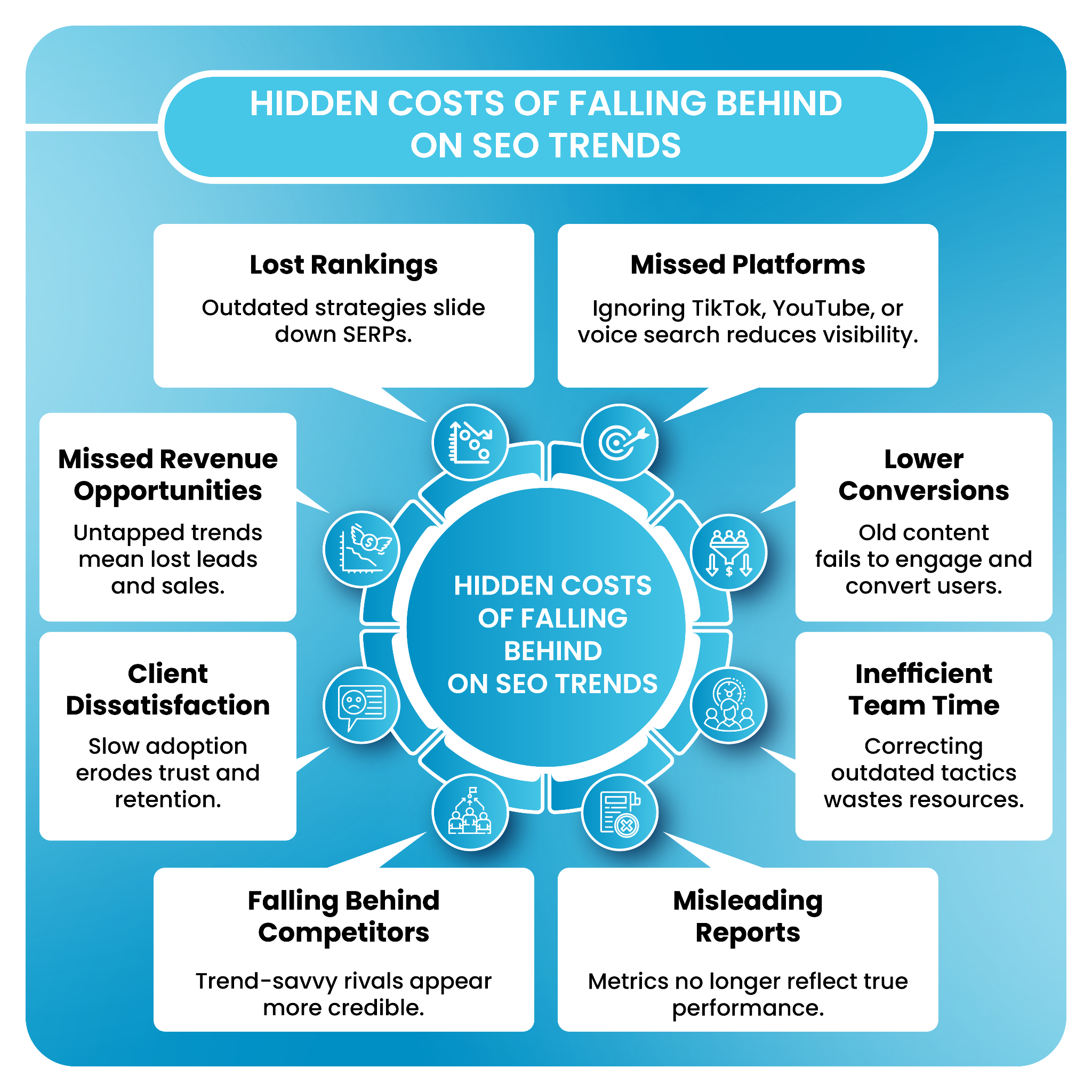
The problem is that keeping up with all these changes requires constant learning, new tools, and specialized expertise. This is where many agencies start to struggle.
The Core Challenge: Why Agencies Struggle to Keep Up Internally
1. Constant Algorithm and AI Updates
Google's algorithm changes frequently. On top of that, AI systems are continuously evolving.
Keeping up requires ongoing testing, learning, and adjustments. This is difficult to manage while also handling client work.
2. Talent and Skill Gaps
Modern SEO requires more than just keyword research.
Agencies now need:
- Technical SEO specialists
- AI-focused strategists
- Skilled content creators who understand search intent
Hiring and retaining this level of expertise can be expensive and time-consuming.
3. Tool and Technology Costs
Advanced SEO tools and AI platforms come at a high cost. Managing multiple tools for different functions adds complexity.
For many agencies, maintaining a full-stack SEO operation internally is not sustainable.
4. Scalability Issues
As agencies grow, managing multiple clients becomes harder. Each client has different needs, industries, and competition levels.
This often leads to:
- Burnout within teams
- Inconsistent delivery
- Slower execution
The reality is that agencies are no longer competing based on effort alone. They are competing on speed, expertise, and adaptability.
To overcome these challenges, many agencies are turning to a more scalable solution.
What Is White Label SEO?
White label SEO is often misunderstood as simple outsourcing. In reality, it is much more than that. It acts as a capability multiplier. It allows agencies to expand their expertise, improve execution, and adapt to trends without building everything in-house.
Instead of replacing internal teams, it enhances them. It provides access to specialized skills, advanced processes, and scalable systems.
In today’s fast-moving search landscape, white label SEO is not just a support function. It is a strategic advantage.
Further Reading: White Label SEO: The Complete Agency Growth Guide
How White Label SEO Helps Agencies Stay Ahead of Search Trends in 2026?
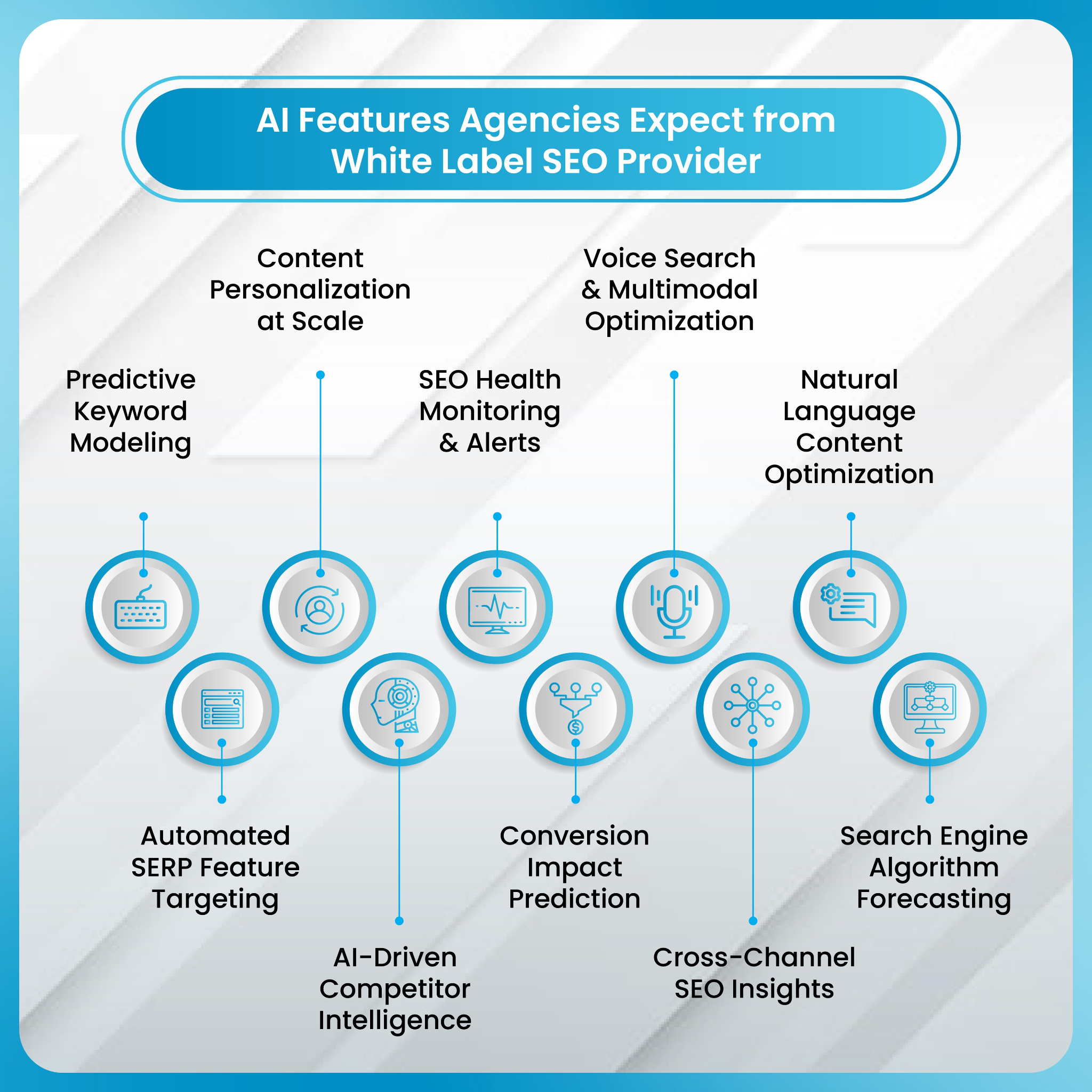
1. AI Search and Generative Engine Optimization
Optimizing for AI search requires a different approach.
Content must be:
- Clear and structured
- Contextually relevant
- Built around user intent
White label SEO teams often specialize in these strategies. They stay updated with AI trends and adjust content frameworks accordingly.
2. Zero-Click Search Optimization
With most searches ending without clicks, visibility becomes the priority.
This includes:
- Featured snippets
- FAQ sections
- Structured content
White label partners can scale the creation of this type of content efficiently.
3. Entity-Based SEO and E-E-A-T
Search engines now focus on entities and authority rather than just keywords.
This means building:
- Topic clusters
- Strong internal linking
- Credible content
White label SEO services often use advanced frameworks to establish authority and trust signals.
4. Voice and Conversational Search
Voice search continues to grow, driven by natural language queries.
Content needs to reflect how people actually speak.
White label teams optimize content for conversational intent, improving visibility in voice-driven results.
5. Content Depth, Quality, and Differentiation
Long-form, high-quality content continues to perform better. In fact, detailed content can drive up to three times more traffic compared to shorter pieces.
Producing this level of content consistently is difficult for most agencies.
White label SEO solves this by enabling:
- Regular content production
- High editorial standards
- SEO optimization at scale
6. Multi-Platform Search Visibility
SEO now extends beyond traditional search engines.
White label strategies often include:
- Video optimization
- Social content alignment
- Cross-platform visibility
This helps agencies deliver a more complete search strategy.
7. Faster Execution and Continuous Optimization
Speed matters more than ever.
White label teams allow agencies to:
- Launch campaigns faster
- Implement changes quickly
- Continuously optimize performance
This creates a strong competitive advantage.
8. Data-Driven SEO and Performance Tracking
Modern SEO is driven by data.
White label services provide:
- Advanced reporting
- Performance insights
- Clear metrics beyond rankings
This helps agencies demonstrate real value to clients.
With these capabilities in place, agencies can move from reactive SEO to proactive growth strategies.

How DashClicks White Label SEO Services Support Agencies?
DashClicks provides a structured approach that helps agencies manage SEO at scale without increasing internal workload. Their systems are designed to simplify execution while maintaining consistency across client campaigns.
Agencies benefit from standardized workflows that cover on-page optimization, technical SEO, and content creation. This ensures that every campaign follows proven processes without requiring constant oversight. At the same time, the platform gives access to specialized teams who stay updated with evolving search trends, including AI-driven search and content optimization strategies.
One of the key advantages is scalable content production. Through white label SEO services, agencies can deliver consistent, high-quality content that supports visibility in both traditional and AI-based search environments. This is especially important as search continues to shift toward structured and authoritative content.
Speed is another important factor. The platform enables faster turnaround times, allowing agencies to respond quickly to algorithm updates and client needs. Combined with detailed reporting dashboards, agencies can track performance, measure results, and communicate progress clearly to clients.
Overall, the platform helps agencies grow without adding operational complexity. Instead of hiring and training new teams, agencies can expand their services and handle more clients with confidence.
Conclusion: Winning in Search Requires Speed, Expertise, and Scale
Search will continue to evolve. AI will become more integrated, user behavior will keep changing, and competition will increase.
Agencies that rely only on traditional SEO methods will struggle to keep up. The demands of modern search require faster execution, deeper expertise, and the ability to scale without losing quality.
White label SEO offers a practical way to meet these demands. It allows agencies to adapt quickly, expand their capabilities, and deliver stronger results without overloading internal teams.
In today’s environment, it is no longer just an optional support system. It has become a key part of staying competitive.

How Agencies Improve Engagement Metrics Using White Label Facebook Ads
Not long ago, digital advertising success was mostly about impressions and reach. If an ad was seen by enough people, it was considered effective. That thinking has changed completely. Today, engagement metrics drive real performance, and agencies are expected to deliver measurable results across every campaign.
Platforms like Meta have shifted their algorithms to prioritize user interaction over passive exposure. This means ads that generate clicks, comments, shares, and meaningful actions get better distribution. Ads that don’t engage simply fade away, no matter how large the budget.
For agencies, this creates both an opportunity and a challenge. Clients are no longer satisfied with vanity metrics. They want to see strong click-through rates, consistent conversions, and a clear return on ad spend. Delivering that level of performance across multiple accounts is not easy.
This is where white label Facebook Ads have become a powerful solution. Instead of trying to manage everything internally, agencies can rely on specialized teams that focus on performance at scale.
To truly understand how this works, it’s important to first break down what engagement metrics actually mean and why they matter so much.
Engagement in Facebook Ads is not just one number you glance at in a dashboard. It’s a network of metrics that work together. When one improves, it often creates a ripple effect across the rest.
For example, better creatives can increase click-through rate, which can lower costs and improve conversions. Understanding how these pieces connect is what separates average campaigns from consistently profitable ones.
Let’s break it down properly.
A. Primary Performance Metrics (Direct Revenue Impact)
These are the metrics that directly influence revenue and profitability. If you’re reporting results to clients or measuring campaign success, this is where most of your attention goes.
1. Click-Through Rate (CTR)
Click-Through Rate measures the percentage of people who click on your ad after seeing it.
- A high CTR usually means your creative, headline, and targeting are aligned
- A low CTR often signals weak messaging or poor audience fit
- Strong CTR also improves your ad relevance, which can reduce costs over time
In simple terms, CTR tells you if your ad is doing its job of grabbing attention.
2. Conversion Rate (CR)
Conversion Rate tracks how many users complete a desired action after clicking your ad.
- This could be a purchase, sign-up, or lead submission
- A strong CR indicates your landing page, offer, and user experience are aligned
- A weak CR often points to friction after the click, not the ad itself
This is where many campaigns fail. The ad works, but the landing experience doesn’t.
3. Cost Per Click (CPC)
Cost Per Click is the amount you pay for each click.
- Lower CPC means you’re getting traffic more efficiently
- CPC is heavily influenced by CTR and competition
- Better engagement typically leads to lower CPC over time
Think of CPC as a reflection of how expensive it is to earn attention.
4. Cost Per Mille (CPM)
Cost Per Mille is the cost per 1,000 impressions.
- It’s influenced by audience competition, seasonality, and ad quality
- High CPM doesn’t always mean poor performance, but it reduces margin flexibility
- Strong engagement can help stabilize or lower CPM
This metric helps you understand how expensive it is to reach your target audience.
5. Return on Ad Spend (ROAS)
ROAS is the ultimate performance metric.
- It shows how much revenue you generate for every rupee spent
- A ROAS of 4 means you earn ₹4 for every ₹1 spent
- It combines the impact of all other metrics into one number
If CTR brings people in and CR converts them, ROAS tells you if it’s all worth it.
Benchmark Context: Industry benchmarks suggest:
- Average Facebook Ads CTR: ~0.9% to 1.6%
- Average conversion rates: ~2% to 5% (varies by industry)
These are useful reference points, but top-performing campaigns often exceed them by a wide margin through continuous testing and optimization.
B. On-Ad Engagement Metrics (User Interaction Signals)
These metrics reflect how people interact with your ad directly within the platform. While they don’t always translate into immediate revenue, they play a major role in how the algorithm evaluates your content.
Key interaction signals include:
- Likes and reactions
- Comments
- Shares
- Saves
- Overall engagement rate
Why do these matter:
- High engagement signals tell the algorithm your ad is relevant and valuable
- This can lead to better placement, lower costs, and wider reach
- Social proof (likes, comments, shares) increases trust and improves CTR
For example, an ad with hundreds of comments and shares naturally feels more credible than one with zero interaction.
C. Video Engagement Metrics (Critical in 2025 and Beyond)
Facebook Video Ads continues to dominate ad performance across platforms. But simply using video isn’t enough. You need to measure how people actually consume it.
Important video metrics include:
3-Second Video Views
- Indicates how effective your hook is
- If users don’t stay for 3 seconds, your opening isn’t strong enough
ThruPlay (15 seconds or full video)
- Measures deeper engagement
- Shows whether your content holds attention beyond the initial hook
Average Watch Time
- Helps you understand overall content quality
- Longer watch times typically signal stronger interest
Video Retention Rate
- Shows how many viewers stay until key moments
- Drop-offs reveal exactly where your content loses attention
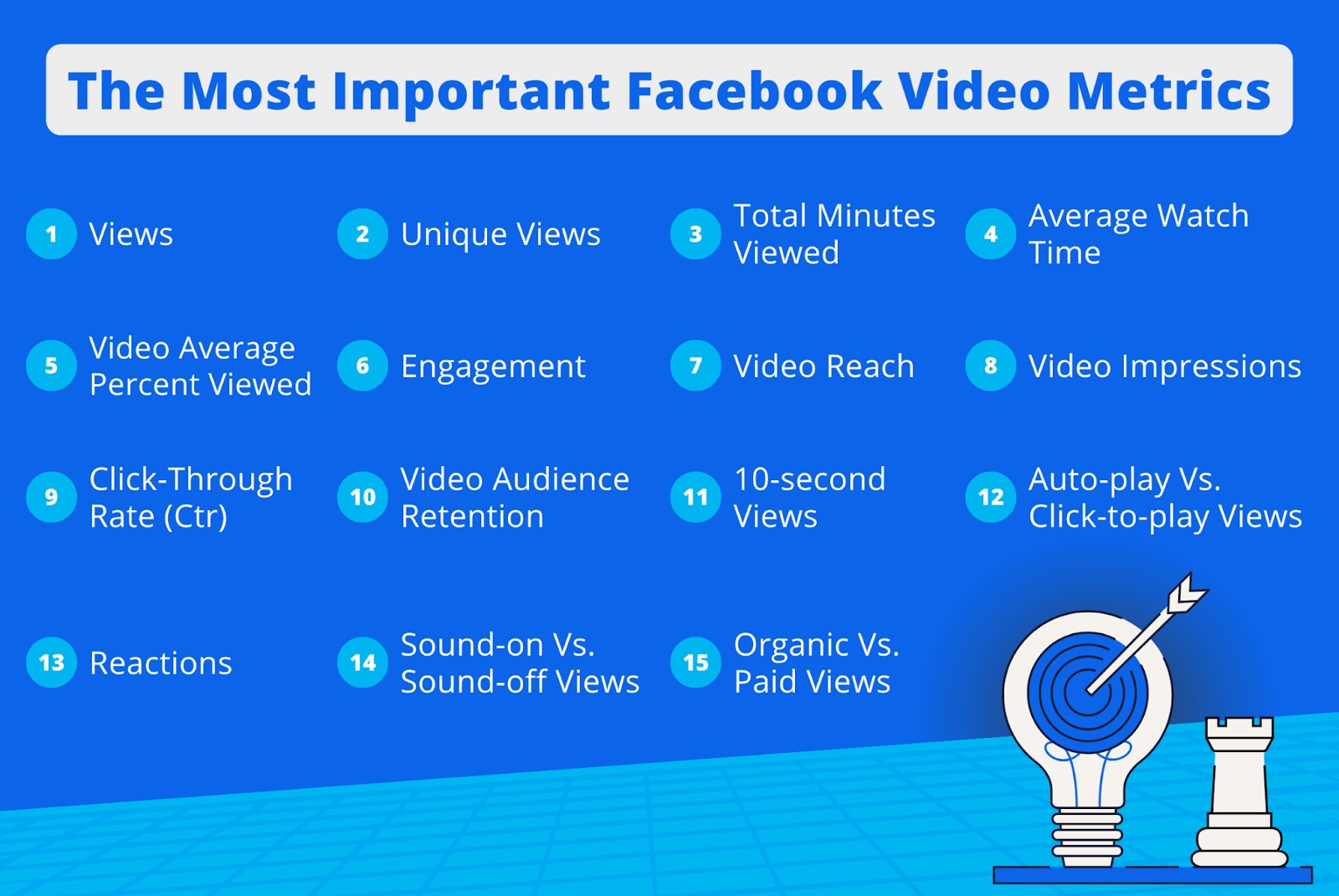
When analyzed together, these metrics give a clear picture of how engaging your video actually is.
Why this matters: Research indicates that well-optimized video ads can generate up to 30% higher engagement compared to static formats. That advantage compounds over time through better reach and lower costs.
D. Behavioral and Funnel Engagement Metrics
Clicks are just the beginning. What users do after clicking is often more important than the click itself.
These metrics help you evaluate the full customer journey.
Key funnel metrics include:
- Landing page views
- Bounce rate
- Time on site
- Add-to-cart actions
- Initiate checkout events
- Purchases
What these tell you:
- Whether your landing page loads properly and quickly
- If your messaging matches user expectations
- Where users drop off in the conversion process
- How strong is your offer really
For example:
- High CTR + low purchases = landing page problem
- Strong add-to-cart but weak checkout = pricing or trust issue
This is where real optimization happens. Not just at the ad level, but across the entire funnel.
E. Delivery and Quality Indicators
These metrics don’t directly represent engagement, but they strongly influence it.
Frequency
- Measures how often the same user sees your ad
- High frequency can lead to ad fatigue and declining performance
- Most campaigns start to see diminishing returns when frequency climbs too high
Relevance Diagnostics
- Includes rankings for quality, engagement rate, and conversion rate
- Helps you understand how your ad compares to competitors targeting the same audience
Impressions vs Reach
- Reach = number of unique users
- Impressions = total views (including repeat views)
- A large gap between the two often indicates repeated exposure
Why this matters:
- If users see the same ad too often, engagement drops
- Creative fatigue leads to lower CTR and higher costs
- Refreshing creatives regularly helps maintain performance
Bringing It All Together
No single metric tells the full story.
- CTR tells you if people are interested
- CR tells you if they take action
- Engagement metrics tell you how content resonates
- Funnel metrics reveal where performance breaks down
- Delivery metrics explain why performance changes over time
The real advantage comes from reading these metrics together, not in isolation. That’s how agencies move from guesswork to consistent, scalable results.
Key Insight: No single metric defines success. Engagement performance works as a connected system where each element influences the others.
While agencies understand these metrics, consistently improving them across multiple clients is where things become difficult.
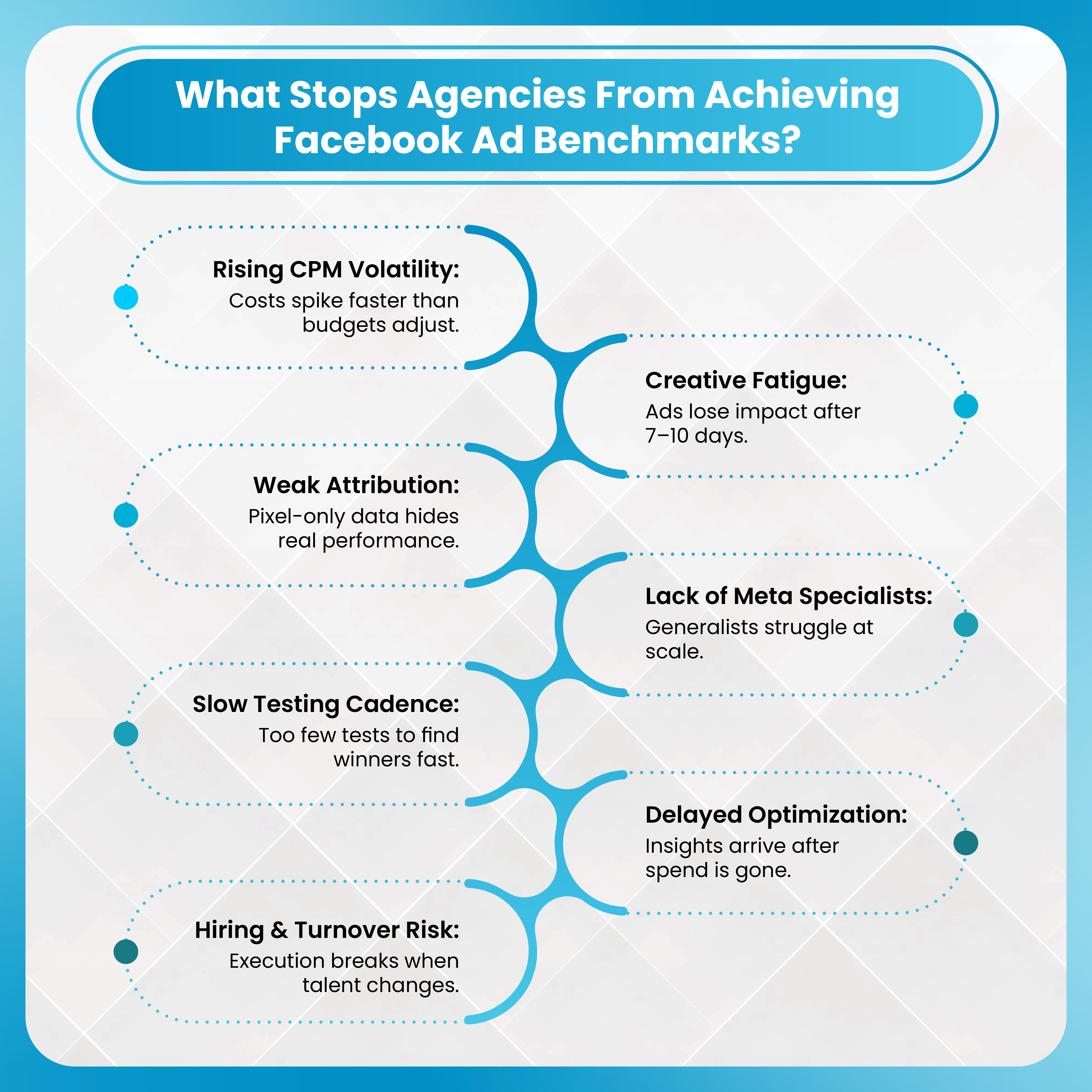
Why Agencies Struggle to Improve Engagement Metrics In-House?
Managing Facebook Ads at scale is complex. Even experienced agencies face recurring challenges when trying to improve engagement consistently.
One of the biggest issues is limited creative production. Strong engagement starts with strong creatives. Without a steady flow of new ideas, CTR tends to stagnate. Another common problem is inconsistent funnel optimization. Even if ads generate clicks, poor landing pages can lead to low conversion rates.
Cost control is also a challenge. As competition increases, CPC and CPM often rise. Without advanced optimization strategies, campaigns become less efficient over time. Testing is another area where many agencies fall short. Structured A/B testing requires time, data, and resources. Without it, learning cycles slow down, and performance plateaus.
Managing multiple client accounts adds another layer of complexity. Each account requires attention, analysis, and optimization. Scaling this internally often means hiring more people, which increases costs.
On top of that, privacy changes and tracking limitations have made attribution more difficult. This makes it harder to identify what’s actually working. The core issue is that many agencies optimize metrics in isolation rather than treating them as part of a larger system.
This is exactly the gap that white label Facebook Ads are designed to fill.
What White Label Facebook Ads Mean for Agencies?
White label Facebook Ads allow agencies to outsource campaign execution to specialized teams while maintaining their own branding.
These external teams handle key components such as:
- Creative strategy and production
- Media buying and optimization
- Funnel alignment
- Performance tracking and reporting
The agency remains the client-facing partner, while the white label provider works behind the scenes.
The biggest advantage is access to expertise and data across multiple accounts. This allows for more refined strategies and faster optimization. But the real value lies in how these systems improve engagement metrics across the board.
How White Label Facebook Ads Improve All Engagement Metrics Systematically?
White label Facebook advertising solutions don’t just improve one metric. They enhance the entire engagement ecosystem.
1. CTR and On-Ad Engagement (Top-of-Funnel Performance)
Strong engagement starts with compelling creatives. White label teams typically use high-volume creative testing frameworks. This means multiple variations of ads are tested simultaneously to identify what resonates best.
They also focus on platform-native formats like Reels and Stories, which tend to perform better in today’s environment. Messaging is carefully aligned with audience intent, ensuring ads feel relevant rather than intrusive.
Impact:
- Higher CTR
- More likes, shares, and comments
- Improved video engagement
2. Conversion Rate and Funnel Engagement (Mid to Bottom Funnel)
Getting clicks is only part of the equation. Converting those clicks is where real value lies. White label teams ensure alignment between ads and landing pages. This creates a seamless user experience.
They also implement retargeting strategies that bring back warm audiences, which often convert at a much higher rate. Offer optimization plays a key role as well. Small changes in messaging or pricing can significantly impact conversions.
Impact:
- Increased conversion rates
- More add-to-cart and purchase actions
- Lower bounce rates
3. Cost Efficiency Metrics (CPC and CPM Optimization)
Better engagement naturally leads to lower costs. When users interact more with ads, relevance scores improve. This often results in reduced CPC and more stable CPM.
White label teams also use advanced bidding strategies and placement optimization to maximize efficiency.
Impact:
- Lower CPC
- Controlled CPM
- Reduced cost per conversion
4. Video and Content Engagement Optimization
Video performance depends heavily on the first few seconds. White label providers focus on hook-driven creatives that capture attention immediately. They continuously refine videos based on retention data.
Multiple formats are tested to identify what works best for each audience.
Impact:
- Higher ThruPlay rates
- Longer watch times
- Better retention
5. Delivery and Algorithmic Performance
Ad fatigue is a common issue that reduces engagement over time. White label teams manage frequency carefully and refresh creatives regularly to keep campaigns effective.
They also leverage advanced campaign types like Advantage+ to improve delivery.
Impact:
- Controlled frequency
- Improved relevance diagnostics
- Better reach efficiency
6. ROAS as the Outcome of Engagement Optimization
All engagement improvements ultimately contribute to better returns. A full-funnel strategy ensures that users are guided from awareness to conversion.
Budgets are allocated based on performance, ensuring that high-performing campaigns receive more investment.
Final Impact:
- Higher ROAS
- Lower customer acquisition cost
- More predictable revenue
The key takeaway here is simple. White label partners don’t optimize individual metrics. They optimize the entire system.
Further Reading: Why Agencies Struggle with ROAS and How White Label Facebook Ads Fix It?

Scaling Engagement Across Clients Without Increasing Headcount
One of the biggest advantages of white label Facebook Ads is scalability.
Agencies can manage multiple campaigns across different industries without increasing internal workload.
This is possible because:
- Campaigns are executed in parallel
- Testing cycles are faster
- Proven frameworks are reused across accounts
As a result, agencies can take on more clients while maintaining consistent performance. This not only improves profitability but also strengthens client retention.
The Systems Behind Consistent Engagement Growth
Sustainable engagement improvements don’t come from one-off tactics. They come from structured systems.
White label providers rely on:
- Creative testing matrices that identify winning variations
- Audience segmentation frameworks for precise targeting
- Cross-account learning that accelerates optimization
- AI-driven tools that enhance performance
These systems allow for continuous improvement without starting from scratch each time. The result is consistent, predictable growth in engagement metrics.
How DashClicks Helps Improve Engagement Metrics with White Label Facebook Ads?
DashClicks plays a key role in helping agencies improve engagement metrics through a structured and performance-driven approach.
Their white label Facebook advertising services focus on full-funnel optimization. Campaigns are not just designed to generate clicks but to drive meaningful actions that impact revenue.
They continuously test new creatives to keep campaigns fresh and engaging. This helps prevent ad fatigue and ensures consistent performance over time. The platform also leverages data from multiple campaigns to refine strategies quickly. This allows for faster improvements in metrics like CTR, conversion rate, and ROAS.
Another important aspect is scalability. Agencies can expand their client base without hiring additional staff. DashClicks handles execution while the agency maintains full control of client relationships. Everything is managed under the agency’s brand, creating a seamless experience for clients.
This combination of strategy, execution, and scalability makes it easier for agencies to consistently improve engagement metrics across all accounts.
Strategic Takeaways: Turning Engagement Metrics into Agency Growth
Engagement metrics are no longer just indicators of ad performance. They are leading signals of business growth. Agencies that focus on improving these metrics can deliver stronger results and build long-term client relationships.
A few key takeaways:
- Engagement is a system, not a single metric
- Creative, targeting, and funnel optimization must work together
- Consistency is more important than short-term wins
- Scalable systems drive sustainable growth
White label Facebook Ads provide a practical way to achieve all of this without increasing internal complexity. They allow agencies to focus on strategy and client relationships while execution is handled by specialists.
Conclusion
Improving engagement metrics is one of the most important challenges agencies face today. With increasing competition and evolving algorithms, delivering consistent results requires more than just basic campaign management.
It requires a system that connects every part of the funnel, from the first impression to the final conversion. White label Facebook Ads offer a clear path forward. They bring together expertise, data, and scalable processes that improve performance across all key metrics.
For agencies looking to grow without sacrificing quality, this approach provides both efficiency and consistency. In the end, agencies that master engagement are the ones that build stronger campaigns, retain more clients, and scale with confidence.

The Hidden Financial Leverage of White Label SEO for Growing Agencies
Many digital agencies grow their revenue but still struggle with profitability. At first glance, increasing client numbers should naturally lead to higher profits. In reality, operational costs often rise just as quickly. Hiring more specialists, investing in new tools, and managing complex workflows can quickly eat into margins.
A large part of this challenge comes from the types of services agencies commonly offer. Web design, branding, and advertising setups often operate on project-based pricing. Once the work is finished, the revenue stops. This creates a cycle where agencies must constantly search for new clients just to maintain stable income.
Search engine optimization (SEO) works very differently. According to research by BrightEdge, organic search drives over 53% of total website traffic across industries. That makes SEO one of the most powerful digital marketing channels available today. Businesses depend on it to stay visible, attract new customers, and build long-term growth online.
Despite this demand, many agencies hesitate to scale their SEO services. The reason is simple. SEO is operationally complex. It requires technical expertise, content creation, analytics, and continuous optimization.
Because of these challenges, white label SEO is often viewed simply as outsourcing. In reality, its true value goes much deeper. It creates a powerful form of financial leverage that allows agencies to scale services, stabilize revenue, and increase profit margins without dramatically increasing internal costs.
To understand how this works, it helps to look at how SEO changes the underlying economics of agency revenue.
Why SEO Is One of the Most Economically Powerful Services Agencies Can Offer?
From a financial perspective, SEO stands apart from most other agency services. The biggest difference lies in how it is priced and delivered.
Unlike one-time projects, SEO typically operates on long-term retainers. Instead of a single payment, clients pay a monthly fee for ongoing optimization, content improvements, and strategy updates.
Industry surveys show that around 85% of SEO agencies use monthly retainers as their primary pricing model. These retainers often range between $1,500 and $5,000 per month, depending on the complexity of the campaign and the competitiveness of the industry.
This recurring structure changes the entire revenue model of an agency.
Consider a simple comparison:
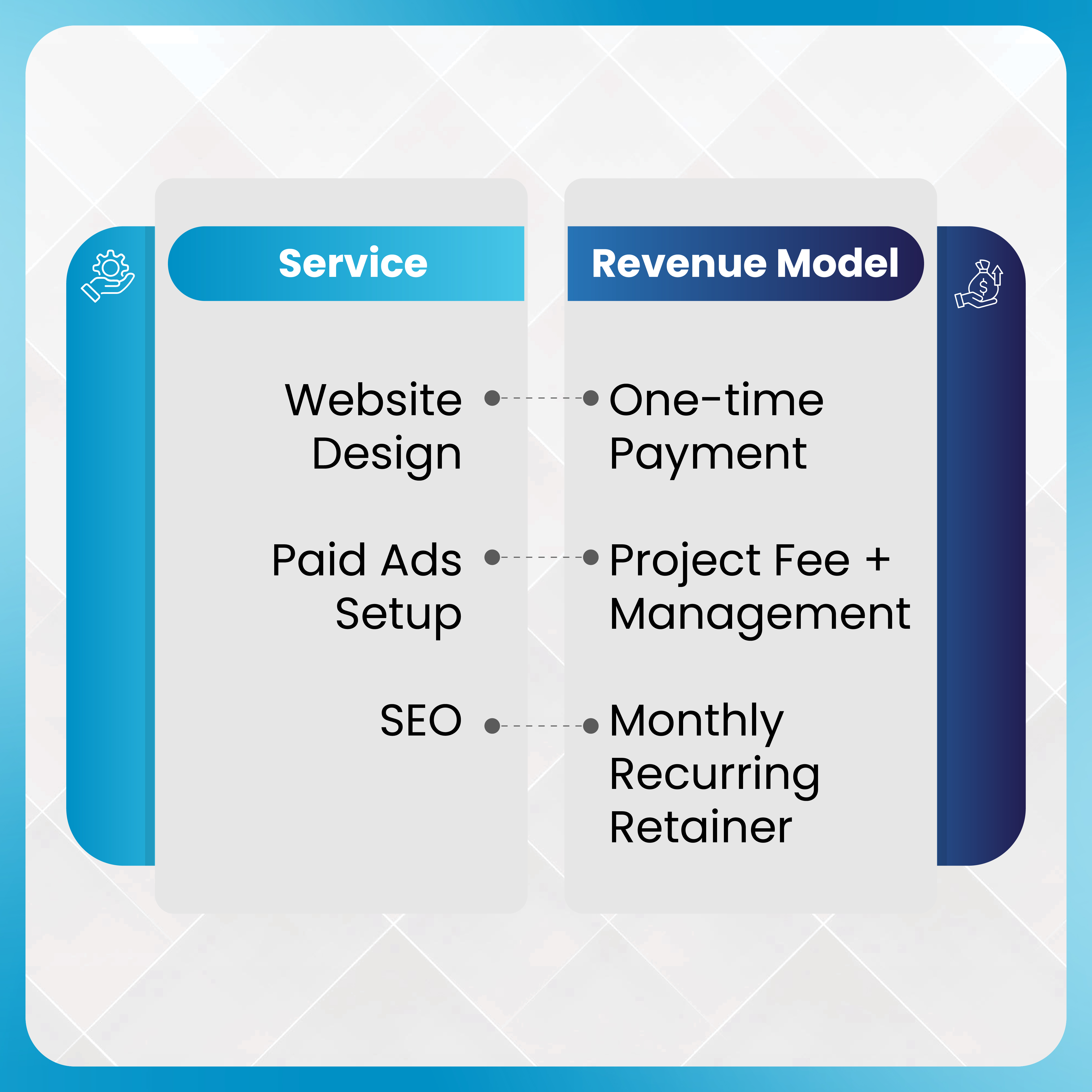
Project-based work generates short bursts of revenue. Recurring SEO retainers generate consistent income month after month.
This shift from transactional income to recurring revenue is one of the biggest advantages SEO offers agencies. Predictable income allows agencies to forecast revenue, plan hiring decisions, and build stable growth.
However, the financial opportunity comes with a challenge. Delivering SEO services at scale requires specialized skills and dedicated teams.
The Real Cost of Scaling SEO Internally
Running a full SEO department inside an agency requires several specialized roles. Each plays an important role in achieving measurable results for clients.
Typical SEO teams include:
- Technical SEO specialists who manage site structure and performance
- Content strategists who develop keyword-driven content plans
- Link-building specialists focused on authority development
- SEO analysts are responsible for reporting and campaign insights
Hiring these professionals can be expensive. A mid-sized agency building an internal SEO team may face costs like the following:
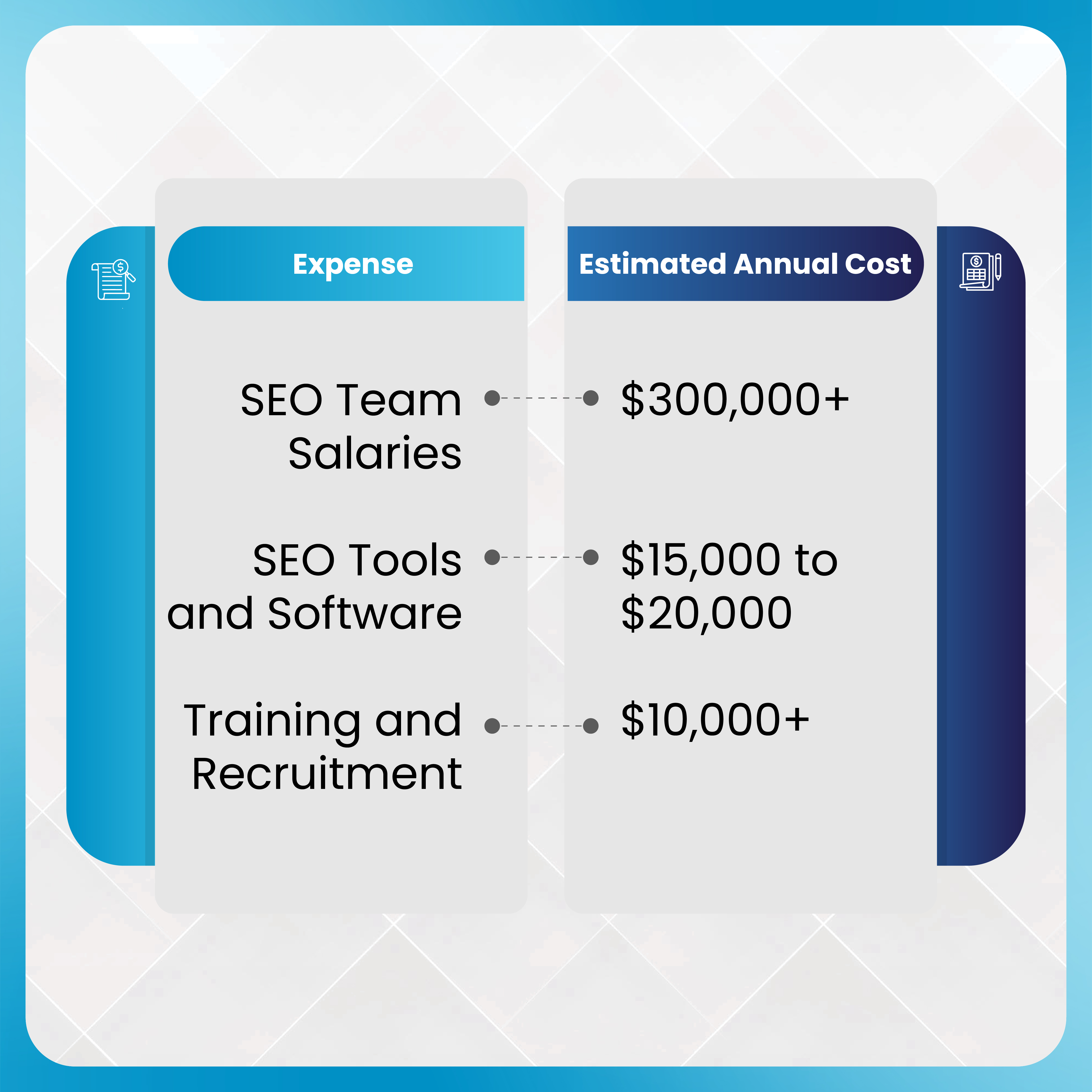
Another operational limitation appears when agencies scale client numbers. On average, one SEO specialist can effectively manage only 6 to 10 clients at a time.
This means revenue growth becomes directly tied to hiring more staff. Every increase in clients requires more personnel. As a result, agency growth becomes linear rather than scalable.
This is where the concept of financial leverage enters the picture.
White label SEO allows agencies to expand their service offerings without building and maintaining large internal teams. By partnering with specialized providers, agencies can unlock several powerful financial advantages.
Financial Leverage #1: Increasing Client Lifetime Value
One of the most significant benefits of SEO is its ability to extend client relationships.
Unlike short-term campaigns, SEO requires ongoing work. Rankings improve gradually, strategies evolve, and search algorithms change regularly. Because of this, clients often remain with agencies for long periods.
Industry data suggests the average SEO client relationship lasts between three and three and a half years. In fact, studies indicate that over 60% of SEO clients stay with agencies for more than two years.
This dramatically increases client lifetime value.
For example:
- Monthly SEO retainer: $2,500
- Client lifespan: 36 months
Total revenue from a single client: $2,500 × 36 = $90,000
Now compare that with a typical web design project: One-time website build: $5,000
Even if the agency completes several projects each year, the long-term revenue potential of SEO remains far greater.
White label SEO allows agencies to capture this extended revenue stream without building the internal infrastructure required to deliver complex campaigns. But the financial leverage does not stop with retention.
Financial Leverage #2: Expanding Average Retainer Size
Many businesses prefer working with agencies that can manage multiple aspects of their digital marketing strategy. Instead of hiring separate vendors, they look for partners who can integrate services.
Research shows that around 60% of businesses prefer agencies that combine SEO with other marketing solutions.
This creates an opportunity for agencies to increase their average client retainer by bundling services together.
Consider a typical integrated marketing package:
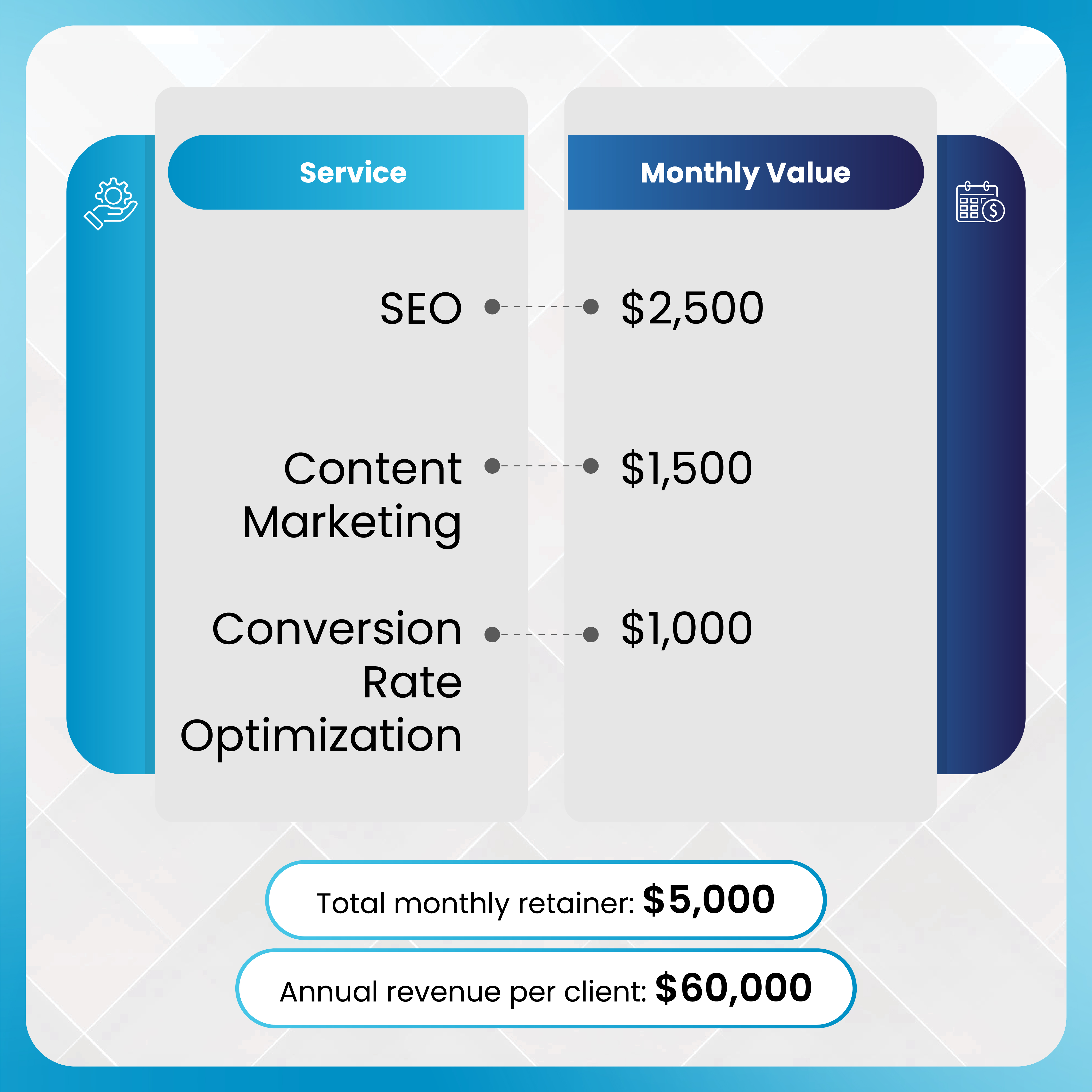
SEO often becomes the central component that holds these services together. Once a business invests in organic growth, it naturally requires supporting strategies such as content development and conversion optimization.
White label SEO makes it possible for agencies to offer these expanded packages without dramatically increasing their internal workload.
However, increasing retainers only works if agencies can handle growing demand.
Financial Leverage #3: Decoupling Revenue Growth from Headcount Growth
Many agencies eventually reach a capacity limit. Their team becomes fully booked, and adding more clients requires hiring additional employees.
This model creates a direct relationship between staff size and revenue potential.
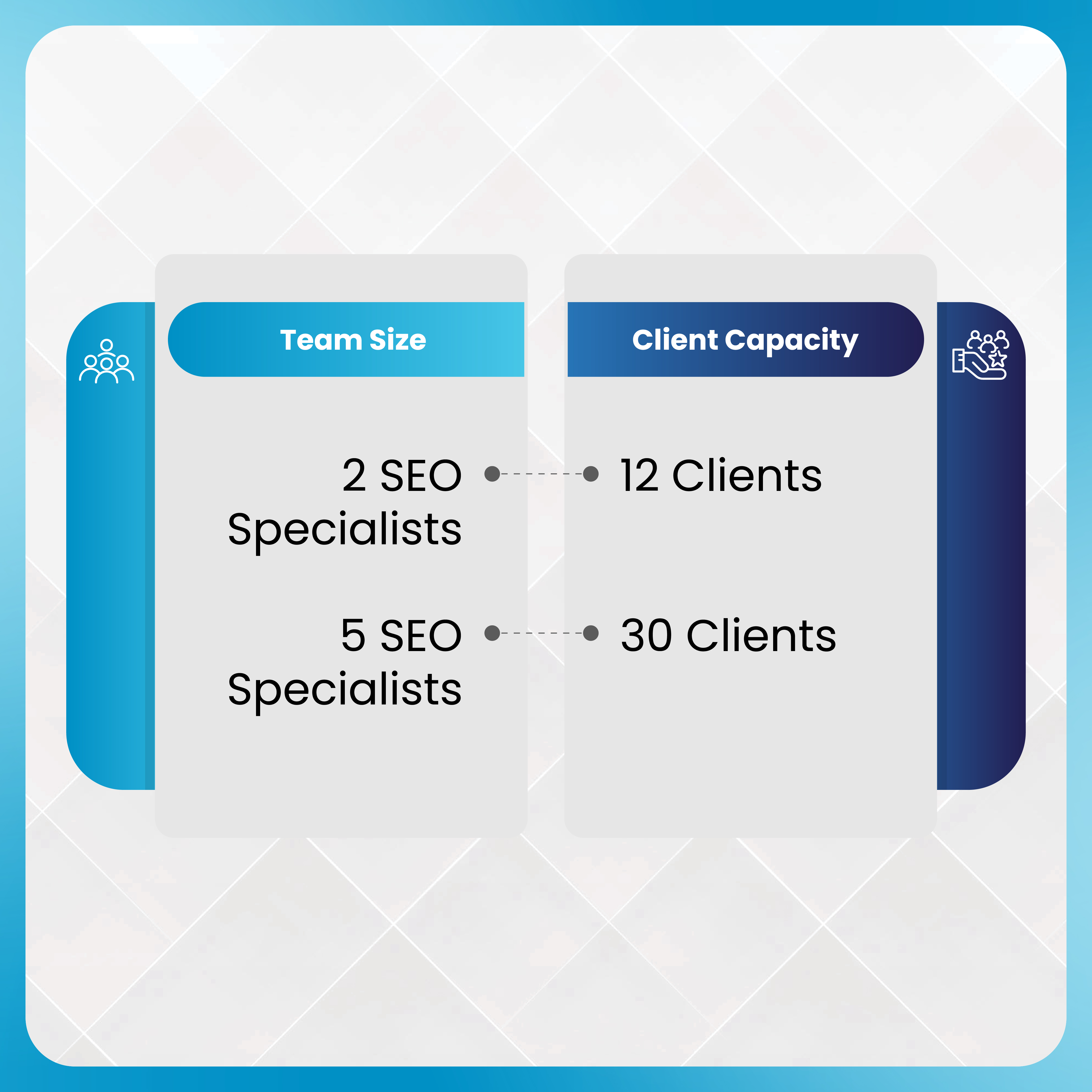
While revenue increases, payroll expenses rise at nearly the same rate. White label SEO changes this dynamic entirely. Agencies can support significantly more clients without expanding their internal team.
Instead of hiring specialists for every new campaign, fulfillment is handled by dedicated SEO providers with large teams and established processes. In some cases, agencies can support 100 or more SEO clients through white label partnerships.
A simplified growth scenario might look like this:
- 10 SEO clients generating $30,000 monthly revenue
- 100 SEO clients generating $300,000 monthly revenue
The operational burden does not grow at the same pace because fulfillment is already scaled within the partner organization. This creates true financial leverage.
But revenue alone is not the only factor that matters. Profit margins are equally important.
Financial Leverage #4: Margin Optimization
SEO services often deliver strong margins when structured properly.
Many agencies price SEO retainers based on market value rather than the exact fulfillment cost. White label providers typically offer services at wholesale rates, allowing agencies to set their own pricing strategies. In many cases, agencies maintain profit margins between 30% and 50%.
A simple example illustrates this model:
Client Price: $3,000
Provider Cost: $1,800
Profit: $1,200
Now imagine scaling this across multiple clients.
- 25 SEO clients
- Profit per client: $1,200
Monthly profit: $30,000
As client numbers grow, these margins become increasingly powerful. Over time, recurring profits from SEO retainers can form the financial backbone of an agency.
Strong margins become even more valuable when combined with predictable recurring revenue.
Financial Leverage #5: Building Predictable Recurring Revenue
One of the biggest challenges agencies face is income volatility. Project-based work often leads to unpredictable revenue cycles. SEO reduces this uncertainty because campaigns require ongoing effort.
Most campaigns take six to twelve months to achieve meaningful results. As a result, businesses usually commit to long-term contracts or extended service agreements.
This leads to several important benefits:
- Stable monthly cash flow
- More accurate revenue forecasting
- Improved financial planning
- Reduced pressure to constantly acquire new clients
Studies frequently show that acquiring a new customer can cost five times more than retaining an existing one. Long-term SEO relationships help agencies avoid the constant expense of client acquisition.
Beyond financial stability, offering SEO services also creates a competitive advantage.
Competitive Advantage: Why Agencies Without SEO Are Losing Deals
The demand for search visibility continues to grow every year. According to market research from Borrell Associates, the global SEO services market has surpassed $74 billion and continues expanding rapidly.
Businesses increasingly prefer full-service agencies that can handle multiple aspects of digital growth.
These services often include:
- SEO strategy
- Paid advertising management
- Website optimization
- Content development
Agencies that cannot provide SEO may lose opportunities to competitors offering more complete solutions. Even when businesses initially hire agencies for web design or paid advertising, they frequently ask about SEO during the sales process.
Having the ability to provide SEO services strengthens an agency’s value proposition and increases the likelihood of winning new clients. To fully unlock the financial advantages of SEO, agencies must approach it strategically.
Strategic Playbook: How Agencies Maximize White Label SEO Revenue
Agencies that successfully scale SEO often follow several proven strategies.
1. Bundle SEO Into Core Marketing Packages
Instead of offering SEO as a standalone service, many agencies include it within broader marketing packages.
For example:
Growth Package
- Search engine optimization
- Paid advertising management
- Landing page optimization
This integrated approach makes marketing strategies more effective and increases total contract value.
2. Create Tiered SEO Pricing
Tiered pricing helps agencies serve businesses of different sizes.
Example structure:
- Starter Plan: $1,500 per month
- Growth Plan: $3,000 per month
- Authority Plan: $5,000 per month
This model allows agencies to scale clients gradually as businesses grow.
Further Reading: How Agencies Master White Label SEO Pricing for Maximum Profit
3. Sell Outcomes Instead of Tasks
Businesses rarely care about technical SEO terminology. What they care about are measurable results.
Successful agencies focus their conversations on outcomes such as:
- increased leads
- higher search visibility
- improved website conversions
- stronger revenue growth
When SEO is positioned as a business growth strategy rather than a technical service, clients are more likely to commit to long-term partnerships.
How DashClicks Helps Agencies Unlock the Financial Leverage of White Label SEO?
For many agencies, implementing white label SEO requires a reliable partner with established systems and expertise. This is where platforms like DashClicks play an important role in supporting agency growth.
DashClicks provides a comprehensive white label infrastructure designed specifically for digital marketing agencies. Instead of building a full SEO department internally, agencies can leverage the platform to offer fully managed SEO services under their own brand. The service includes essential components such as keyword research and campaign strategy, on-page optimization, content development, link building, and detailed performance reporting.
Agencies can also provide clients with professional white-label reports that clearly demonstrate campaign progress and results. Because the operational fulfillment is handled by experienced specialists, agencies can focus their time on client relationships, sales, and strategy rather than managing technical execution. This structure allows agencies to expand their SEO offerings, increase recurring revenue, and scale their services without the operational complexity that typically comes with building large in-house teams.
Turning SEO Into a Financial Growth Engine
For growing agencies, the challenge is not simply increasing revenue. The real goal is building a business model that scales profitably and sustainably.
SEO plays a unique role in achieving that goal.
It transforms agency economics by introducing recurring revenue, increasing client lifetime value, and enabling long-term relationships. When delivered through white label partnerships, it also removes many of the operational barriers that prevent agencies from scaling.
Through this model, agencies can:
- expand service offerings without large hiring investments
- increase average client retainers
- build predictable recurring income
- maintain healthy profit margins
White label SEO is not simply a delivery method. It is a strategic growth mechanism that allows agencies to unlock financial leverage and scale faster than traditional service models.
As digital competition intensifies, agencies that integrate SEO into their core offerings will be better positioned to grow and compete in the evolving marketing landscape.


The Art of Growing Your Agency with White Label PPC
Digital advertising has become one of the most powerful growth engines for businesses today. Pay-per-click (PPC) advertising sits at the center of that growth. Companies invest heavily in it because the results are measurable, scalable, and fast.
According to industry reports, businesses earn an average of $2 in revenue for every $1 spent on Google Ads, which equals roughly a 200% return on investment. Because of this strong performance, paid search continues to attract a large portion of marketing budgets across industries.
Small and mid-sized businesses have also embraced paid advertising at a rapid pace. Research shows that around 65% of SMBs actively run PPC campaigns, making paid search one of the most widely used digital marketing channels.
For marketing agencies, this creates a massive opportunity. Clients want help managing their advertising campaigns, improving conversion rates, and generating consistent leads. However, delivering PPC services at scale is not as easy as it seems.
Many agencies struggle with:
- Shortages of experienced PPC talent
- Increasing operational workloads
- Managing campaigns across multiple platforms
- Keeping up with algorithm changes and rising competition
Cost-per-click rates in many industries increase between 5% and 12% each year, which means campaigns require continuous optimization to remain profitable.
Because of these challenges, agencies are changing how they deliver PPC services. Instead of building large internal teams, many are turning to white label PPC solutions. In fact, research indicates that about 60% of agencies outsource PPC campaigns, and 73% already use white label services in some capacity.
The agencies growing fastest today are not always the ones hiring the most people. They are the ones building scalable systems that allow them to serve more clients without overwhelming their teams.
To understand how this works, let’s explore how successful agencies use white label PPC services to build a scalable growth model.
The Agency Scaling Problem: Why PPC Growth Breaks Most Agencies
The Operational Bottleneck of In-House PPC
Running PPC campaigns requires ongoing work. Unlike some marketing strategies that can run passively, paid advertising demands constant attention.
Campaign management involves several ongoing tasks:
- Keyword research and expansion
- Bid management and adjustments
- Ad copy testing
- Audience targeting improvements
- Conversion tracking setup
- Performance analysis and reporting
Each of these activities contributes to campaign performance. Even small adjustments can influence click-through rate, cost-per-click, and overall return on ad spend.
For agencies managing multiple clients, the workload adds up quickly.
In many cases, 10 PPC clients can require 40 to 60 hours of management work per month. As agencies grow, this workload multiplies. Without proper systems in place, scaling PPC services can overwhelm even experienced teams.
Why Hiring PPC Talent Doesn’t Always Solve the Problem?
Many agencies attempt to solve the workload issue by hiring in-house PPC specialists. While this approach works in some cases, it also creates new challenges.
Hiring experienced PPC professionals is expensive. Skilled specialists command competitive salaries, and the hiring process can take months.
Even after hiring, training and onboarding new employees takes time. Junior specialists may require three to six months before they reach full productivity.
This delay can slow agency growth and increase operational costs.
Another challenge is fluctuating client demand. Agencies may experience periods where client acquisition slows down. Maintaining a large internal team during these periods can reduce profit margins.
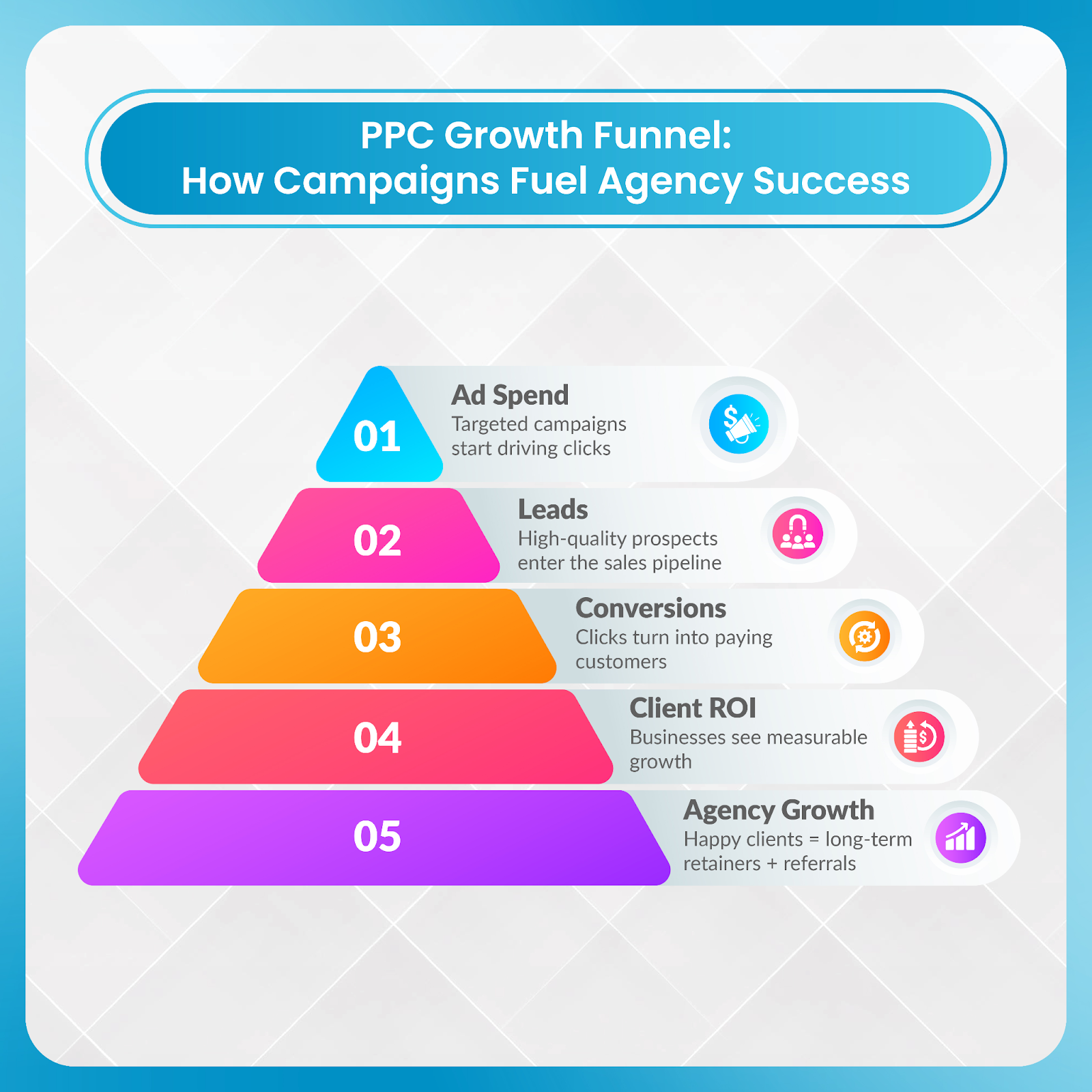
The Strategic Shift Toward White Label Execution
To overcome these limitations, many agencies separate strategy from execution.
In this model, the agency maintains control over the client relationship while outsourcing campaign management.
The agency typically handles:
- Client communication
- Strategy development
- Performance analysis
- Business growth planning
Meanwhile, the white label team manages:
- Campaign setup
- Ongoing optimization
- Bid adjustments
- Reporting and analytics
This approach allows agencies to maintain strategic control while removing the operational burden of day-to-day campaign management.
Once agencies understand this shift, they can build a systematic framework that supports scalable growth.
A Step-by-Step Framework to Scale Your Agency with White Label PPC
Step 1: Identify High-Intent PPC Opportunities Within Your Client Base
Before looking for new PPC clients, agencies should evaluate their existing client relationships.
Many clients already need paid advertising but may not be using it yet. Others may be running campaigns internally with limited results.
The first step is auditing your current client base for PPC opportunities. Industries that typically benefit from paid search include:
- Local service businesses
- SaaS companies
- eCommerce brands
- Healthcare providers
- Legal firms
These industries rely heavily on online lead generation. Paid search can deliver highly targeted traffic quickly.
As of 2024, small to mid-sized businesses spent around $6,000-$10,000 per month in PPC campaigns. Businesses across industries earn $2 in revenue from every $1 spent on Google Ads. For agencies, this represents a valuable recurring revenue stream.
A practical approach is to convert existing clients into multi-service clients. For example, agencies offering SEO can expand services by adding PPC management alongside:
- Landing page optimization
- Conversion rate optimization
- Analytics setup
This combination creates stronger marketing results and increases client lifetime value. Once agencies identify demand, they must ensure they can deliver results efficiently.
Step 2: Partner With a Scalable White Label PPC Provider
The quality of your white label PPC partner directly impacts client satisfaction and retention. A reliable partner allows agencies to scale quickly without sacrificing performance.
When evaluating providers, agencies should consider several factors:
- Platform expertise
- Optimization processes
- Reporting transparency
- Communication structure
- Campaign turnaround time
Platform expertise is especially important. Google Ads alone controls roughly 80% of the global PPC market, making deep platform knowledge essential.
Strong white label PPC partnerships offer several advantages:
- Faster campaign launches
- Access to experienced specialists
- Consistent optimization processes
- Predictable campaign performance
With the right partner in place, agencies can shift their focus toward building a structured PPC service offering.
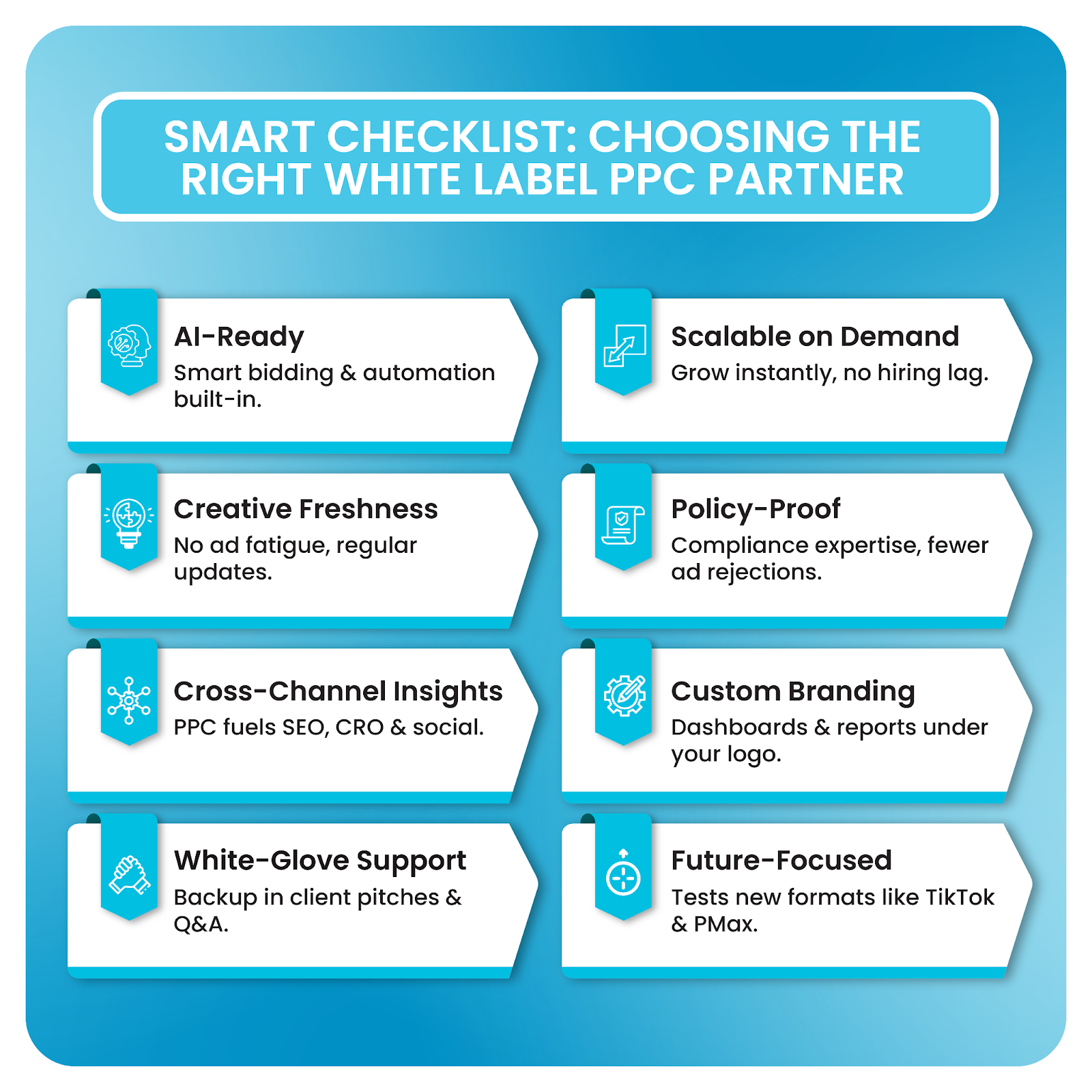
Step 3: Productize Your PPC Service Offering
One of the biggest mistakes agencies make is selling PPC services without a clear structure. Productizing services simplifies both sales and operations.
Many successful agencies create tiered service packages based on ad spend and campaign complexity.
Example service tiers may include:
Starter Plan
- Ad spend between $1,000 and $3,000
- Campaign setup and management
- Monthly reporting
Growth Plan
- Ad spend between $3,000 and $10,000
- Weekly optimization
- Conversion rate improvement recommendations
Scale Plan
- Ad spend above $10,000
- Advanced audience targeting
- Multi-platform campaign management
This structure helps agencies standardize pricing, streamline onboarding, and simplify sales conversations.
Industry data suggests that average PPC conversion rates range between 3% and 7% depending on industry and campaign quality. Optimized campaigns within these benchmarks can deliver strong results for clients.
Step 4: Build a Scalable PPC Client Onboarding System
A structured onboarding process ensures campaigns launch smoothly as your agency grows.
Without proper onboarding, campaign setups can become disorganized.
An effective onboarding process should include:
- Understanding business goals
- Defining target customer profiles
- Conducting landing page audits
- Setting up conversion tracking
- Integrating CRM systems
Data integration is particularly valuable. Studies suggest that connecting PPC campaigns with CRM systems can increase marketing ROI by up to 40% through improved attribution and optimization.
A typical onboarding workflow may include:
- Discovery call
- Data access and permissions
- Tracking setup
- Campaign creation
- Initial launch
- 30-day optimization cycle
Once onboarding becomes consistent and repeatable, agencies can scale PPC services without operational chaos.
How White Label PPC Frees Agencies to Focus on Revenue Growth?
1. Agencies Can Prioritize Sales Instead of Execution
One of the biggest advantages of outsourcing campaign management is the ability to focus on growth activities.
Instead of spending hours adjusting bids and analyzing keywords, agency teams can focus on:
- Outbound prospecting
- Strategic partnerships
- Sales calls
- Upselling existing clients
Consider a simple example: If one salesperson closes three new PPC clients per month at $2,000 retainers, the agency adds $72,000 in annual recurring revenue.
With a white label PPC team handling campaign execution, scaling client acquisition becomes much easier.
2. Agencies Can Strengthen Client Relationships
Clients value communication and strategic insights.
They want guidance on:
- Growth opportunities
- market positioning
- advertising strategy
When agencies are buried in technical campaign tasks, they often have less time for meaningful client conversations.
White label PPC support allows agencies to focus on strategic consulting and relationship building. This shift helps improve client satisfaction and long-term retention.
3. Agencies Can Expand Into Multi-Channel Paid Media
Modern advertisers rarely rely on a single platform.
Most campaigns span multiple channels such as:
- Google Ads
- Facebook and Instagram Ads
- YouTube advertising
- LinkedIn Ads
- Microsoft Ads
Industry research shows that 98% of PPC professionals use Google Ads, while over 70% also run campaigns on Facebook or Instagram.
Managing campaigns across multiple platforms requires specialized expertise. White label PPC providers often have teams experienced in these environments, allowing agencies to expand services without hiring additional specialists.
Common Scaling Mistakes Agencies Make With PPC
1. Hiring Too Early Instead of Outsourcing
Many agencies hire internal PPC staff too early in their growth stage. This increases payroll expenses and reduces profit margins.
White-label partnerships allow agencies to scale services while maintaining flexibility and lower overhead.
2. Selling PPC Without Clear Pricing Models
Unstructured pricing often leads to confusion and inconsistent profitability.
Successful agencies typically use one of three models:
- Percentage of ad spend
- Flat monthly retainers
- Hybrid pricing models
A clear pricing structure improves transparency and simplifies sales discussions.
3. Poor Reporting and Lack of Transparency
Clients expect visibility into campaign performance.
They want to understand:
- Advertising spend
- Cost per lead
- Conversions
- Return on ad spend
Agencies that provide clear reporting build trust and strengthen long-term partnerships.
Research suggests agencies using structured white label systems can experience up to 42% higher client retention due to improved service consistency.
4. Ignoring Landing Page Optimization
Even well-structured PPC campaigns struggle without strong landing pages. Across industries, average conversion rates hover around 3–4%.
Improving landing page performance through conversion optimization can dramatically improve campaign results.
Scaling Your Agency with DashClicks’ White Label PPC Services
As agencies implement scalable PPC frameworks, choosing the right partner becomes critical. This is where DashClicks supports agencies looking to grow their advertising services without increasing operational complexity.
The platform provides fully managed white label PPC services designed specifically for agencies. Their system allows agencies to offer professional campaign management while maintaining full ownership of client relationships.
With DashClicks, agencies gain access to experienced PPC specialists who handle campaign setup, optimization, and ongoing performance improvements. This helps ensure campaigns remain competitive as advertising platforms evolve.
The platform also includes streamlined onboarding processes that allow agencies to launch campaigns quickly and manage multiple clients efficiently. Faster deployment means clients start seeing results sooner.
Another advantage is white labeled reporting. Agencies can provide branded dashboards and performance reports that clearly show campaign results while keeping the agency at the center of the client relationship.
By handling technical execution behind the scenes, DashClicks allows agencies to focus on strategy, client communication, and business development. This balance helps agencies scale PPC services while maintaining strong client satisfaction.
The Future of Agency Growth with White Label PPC
The digital advertising landscape will continue evolving as competition increases and new platforms emerge.
For agencies, scaling PPC services internally can quickly become overwhelming.
White label partnerships provide a smarter growth model. Instead of building large internal teams, agencies can leverage specialized expertise while focusing on high-value activities such as strategy, sales, and client relationships.
With the right systems in place, agencies can:
- Expand their service offerings
- Improve campaign performance
- Increase recurring revenue
- Maintain operational efficiency
- Deliver consistent client results
The agencies that thrive in the coming years will not necessarily be the ones with the largest teams. They will be the ones who build flexible systems capable of supporting rapid growth. White label PPC is one of the most effective ways to achieve that balance.


No results found.
Please try different keywords.
Get Started with
DashClicks Today
Get found online, convert leads faster, generate more revenue, and improve your reputation with our all-in-one platform.
.svg)
Unlimited Sub-Accounts
Unlimited Users
All Apps
All Features
White-Labeled
Active Community
Mobile App
Live Support
100+ Tutorials
Unlimited Sub-Accounts
Unlimited Users
All Apps
All Features
White-Labeled
Active Community
Mobile App
Live Support
100+ Tutorials
Unlimited Sub-Accounts
Unlimited Users
All Apps
All Features
White-Labeled
Active Community
Mobile App
Live Support
100+ Tutorials


